Indonesia executes six drug convicts, five of them foreigners

Indonesia executes six drug convicts, five of them foreigners
Widodo has pledged to bring reform to Indonesia

Ban appeals to Indonesia to stop death row executions

Ban appeals to Indonesia to stop death row executions
United Nations Secretary General Ban Ki-moon has pleaded to Indonesia to stop the execution of prisoners on death row for drug crimes. AFP PHOTO

Pope: 'Death penalty represents failure' – no 'humane' way to kill a person

Pope: 'Death penalty represents failure' – no 'humane' way to kill a person
The pope wrote that the principle of legitimate personal defense isn’t adequate justification to execute someone. Photograph: Zuma/Rex

Obama becomes first president to visit US prison (US Justice Systems / Human Rights)

Obama becomes first president to visit US prison   (US Justice Systems / Human Rights)
US President Barack Obama speaks as he tours the El Reno Federal Correctional Institution in El Reno, Oklahoma, July 16, 2015 (AFP Photo/Saul Loeb)

US Death Penalty (Justice Systems / Human Rights)

US Death Penalty (Justice Systems / Human Rights)
Woman who spent 23 years on US death row cleared (Photo: dpa)


.

.
"The Recalibration of Awareness – Apr 20/21, 2012 (Kryon channeled by Lee Carroll) (Subjects: Old Energy, Recalibration Lectures, God / Creator, Religions/Spiritual systems (Catholic Church, Priests/Nun’s, Worship, John Paul Pope, Women in the Church otherwise church will go, Current Pope won’t do it), Middle East, Jews, Governments will change (Internet, Media, Democracies, Dictators, North Korea, Nations voted at once), Integrity (Businesses, Tobacco Companies, Bankers/ Financial Institutes, Pharmaceutical company to collapse), Illuminati (Started in Greece, with Shipping, Financial markets, Stock markets, Pharmaceutical money (fund to build Africa, to develop)), Shift of Human Consciousness, (Old) Souls, Women, Masters to/already come back, Global Unity.... etc.) - (Text version)

… The Shift in Human Nature

You're starting to see integrity change. Awareness recalibrates integrity, and the Human Being who would sit there and take advantage of another Human Being in an old energy would never do it in a new energy. The reason? It will become intuitive, so this is a shift in Human Nature as well, for in the past you have assumed that people take advantage of people first and integrity comes later. That's just ordinary Human nature.

In the past, Human nature expressed within governments worked like this: If you were stronger than the other one, you simply conquered them. If you were strong, it was an invitation to conquer. If you were weak, it was an invitation to be conquered. No one even thought about it. It was the way of things. The bigger you could have your armies, the better they would do when you sent them out to conquer. That's not how you think today. Did you notice?

Any country that thinks this way today will not survive, for humanity has discovered that the world goes far better by putting things together instead of tearing them apart. The new energy puts the weak and strong together in ways that make sense and that have integrity. Take a look at what happened to some of the businesses in this great land (USA). Up to 30 years ago, when you started realizing some of them didn't have integrity, you eliminated them. What happened to the tobacco companies when you realized they were knowingly addicting your children? Today, they still sell their products to less-aware countries, but that will also change.

What did you do a few years ago when you realized that your bankers were actually selling you homes that they knew you couldn't pay for later? They were walking away, smiling greedily, not thinking about the heartbreak that was to follow when a life's dream would be lost. Dear American, you are in a recession. However, this is like when you prune a tree and cut back the branches. When the tree grows back, you've got control and the branches will grow bigger and stronger than they were before, without the greed factor. Then, if you don't like the way it grows back, you'll prune it again! I tell you this because awareness is now in control of big money. It's right before your eyes, what you're doing. But fear often rules. …
Showing posts with label Australia. Show all posts

Saturday, June 25, 2022

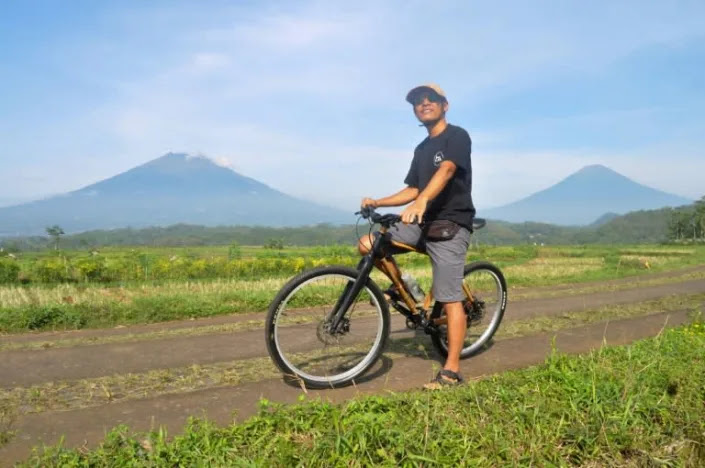
Indonesian designer's wheels behind leaders' bamboo bike bromance

Yahoo – AFP, Marchio GORBIANO, June 24, 2022 

As Indonesian President Joko Widodo led Anthony Albanese around the lush gardens of a presidential palace south of Jakarta earlier this month, he presented the new Australian prime minister with an unusual gift: a bamboo bike. 

The night before, designer Singgih Susilo Kartono learned it would be the Spedagi model he crafts in a small village on the island of Java that the leaders would ride side-by-side in a unique moment of bicycle diplomacy. 

Prime Minister Albanese would tuck his trousers into his socks after the statesmen stripped off their jackets and ties and donned helmets, setting off on the light and environmentally friendly two-wheelers for the symbolic bike ride. 

The 54-year-old designer told AFP the diplomatic gesture was a "special, magical moment" for him after years spent working on the bike. 

"It's not about the bike being bought by Jokowi, but the fact that it was used to welcome PM (Albanese)," he said. 

When not arming world leaders with new bamboo wheels, Kartono is using his sustainable bike craftsmanship to bring jobs to locals and show Indonesian villagers how they can make use of the environment around them.


"I train youths here who lack skills. We have a system to train unskilled people until they can create quality products," he said. 

The model, named after the Indonesian words "sepeda" for bicycle and "pagi" for morning, is built by a team of 15 employees at a workshop in Kartono's village in Central Java, where he saddles up for his own bike ride every day. 

Fast-growing bamboo stalks are cut by his team, coated with preservatives, dried, then laminated before being combined with other parts to assemble the sturdy bike frame. 

Pound for pound, bamboo is as strong as steel when used in lightweight structures, studies have shown, with a high tensile strength that makes it a worthy and environmentally friendly substitute. 

A fully assembled Spedagi bamboo bike can take a week of intricate work, fetching up to 15 million rupiah ($1,000), and some have been sold as far away as Japan, company co-founder Tri Wahyuni told AFP. 

Friendship on wheels

The green wheels used by the two leaders were built with more expensive parts, said Kartono, declining to disclose the price of their rides. 

Widodo, famous at home for gifting bikes to ordinary Indonesians, is a Spedagi fan and bought one personally from Kartono in 2015. 

Albanese was similarly beaming about the bike, taking it back to Canberra and saying people would see him on the streets riding what might be "the only bamboo bike" in the Australian capital. 

Both bicycles and bamboo -- affordable and plentiful in Indonesia -- are closely linked with the archipelago nation's lower classes, something that struck a chord with the two leaders from humble backgrounds. 

But while the Kartono creation merged two symbols of Indonesian heritage, it is now tied to a blossoming bromance cultivated in the first weeks of Albanese's premiership. 

"Every time I ride on the bike, I will remember the friendship with President Widodo," he said. 

With his own creation now crossing the Pacific, Kartono said it was seeing bamboo bikes being made where the plant is rarely found -- such as in northern Europe -- that first motivated him to craft his design. 

"When I dug deep into bicycle products online, I found that bamboo bicycles are made in countries that do not have bamboo. That served as a slap for me," said the entrepreneur. 

"Bamboo is everywhere around my house."

Tuesday, August 11, 2020

New Zealand eyes Cook Islands travel bubble

Yahoo – AFP, Marty Melville, August 10, 2020


New Zealand plans to open a virus-free "travel bubble" with the tiny Pacific realm of Cook Islands before year's end, Prime Minister Jacinda Ardern said Monday, while expressing caution about a similar arrangement with Australia.

Ardern said the quarantine-free travel corridor was possible because New Zealand and the Cooks -- an archipelago of under 10,000 people -- had successfully contained the coronavirus.

"Our expectation is that it would be in place before the end of the year," she told reporters, adding that officials were being careful not to move too quickly on the proposal.

"The last thing anyone wants is to reopen travel, only to have it closed down again because it hasn't been done properly." 

New Zealand has recorded only 22 coronavirus deaths in a population of five million, and marked 100 days since its last case of community transmission on Sunday, while the Cooks declared itself virus-free in mid-April.

The economic benefits of the travel bubble are expected to be felt mostly in the Cooks, a popular tourist destination where Ardern estimated 60 percent of pre-virus visitors were from New Zealand.

A trans-Tasman bubble with Australia would be far more advantageous to New Zealand's economy, where international tourism screeched to a halt when borders were closed in March.

The prospect looked tantalisingly close a few months ago, before Australia was hit with a second wave of infections centred on Victoria state.

"We're still undertaking the foundational work for trans-Tasman travel arrangements but obviously that's going to be sometime off," Ardern said.

All international arrivals into New Zealand are currently required to spend at least 14 days in strictly supervised quarantine.

But New Zealanders domestically are enjoying a near-normal, pre-coronavirus lifestyle with no social distancing and spectators allowed at sports and cultural events.

Wednesday, August 5, 2020

Aboriginal group blocks access to Australia's Uluru over virus fears

France24 – AFP , 4 August 2020

Tourists gather to watch the sunset at Uluru in 2019 Saeed KHAN AFP/File

Sydney (AFP) - Indigenous residents forced the closure of Australia's famed Uluru national park Tuesday, after blocking tourists from accessing the sacred site amid fears over the spread of coronavirus.

About 30 members of the local community physically blocked dozens of tourists arriving from virus-hit eastern Australia from accessing the park entrance, said Glenn Irvine, manager of Mutitjulu Community Aboriginal Corporation, which handles local community issues.

Locals said they were blindsided by the arrival of 43 tourists on a flight from Brisbane, Queensland and decided to take action.

"We were of the understanding that the flight was cancelled," Irvine told AFP.

"We asked for the national park to be closed," he added. When that did not happen, "members of the community gathered at the park gate".

After crisis talks with local authorities Tuesday, the park remained closed.

Uluru-Kata Tjuta National Park said in a statement: "We have the utmost respect for Uluru-Kata Tjuta's traditional owners and are continuing to work in good faith with them and all other parties to keep Mutitjulu residents safe."

More than 395,000 people visited the park in the 12 months to June 2019, according to Parks Australia.

Irvine said there was now tacit agreement that the tourists -- who remained nearby -- would be tested for the virus and no more groups would come from COVID-19 "hotspots".

Queensland has recorded just over 1,000 cases of the virus since the pandemic began and new cases have been relatively rare.

But even in areas where tourism is a mainstay of the local economy, many Aboriginal groups are fearful that any outbreak could badly hit remote Outback communities.

Travel to the Northern Territory, including Uluru -- once known as Ayer's Rock -- has been severely restricted since the pandemic began.

Those measures were recently eased, but visitors from Australia's COVID-19 hotpots are still required to quarantine for 14 days.

Brisbane is currently included on that list.

Overseas travellers remain banned from entering Australia except for some very closely prescribed cases.

Australia recorded 453 new cases Tuesday, taking the total to 18,728 with 10,787 recoveries. The death toll is now 232, after 11 more fatalities.

Wednesday, February 12, 2020

Landmark case says Aboriginal Australians cannot be deported

Yahoo – AFP, Holly ROBERTSON, February 11, 2020

Australia's highest court says immigration law does not apply to Aboriginal
Australians (AFP Photo/SAEED KHAN)

Aboriginal Australians are exempt from immigration law, the country's top court ruled Tuesday, in a historic decision that found indigenous people born overseas cannot be deported.

Australia had been trying to deport two men -- Papua New Guinea citizen Daniel Love and New Zealand citizen Brendan Thoms -- under laws that allow a convicted criminal's visa to be cancelled on character grounds.

Both men identify as Aboriginal Australians, each has one indigenous parent, and they have lived in the country since they were small children.

Love, who served time for assault, and Thoms, who had been jailed for domestic violence, have been battling in the courts to stay in Australia, arguing that they may be "non-citizens" but they are also not "aliens".

The High Court ruled in a decision that split the judges 4-3 that Aboriginal Australians "are not within the reach" of constitutional provisions relating to foreign citizens.

Indigenous people have inhabited the vast continent for more than 60,000 years, while the modern nation's constitution only came into force in 1901.

Thoms -- who was already recognised as a traditional land owner -- was accepted by the court as Aboriginal.

But the judges could not agree on whether Love was under a three-part test that considers biological descent, self-identification and community recognition.

Lawyer Claire Gibbs, who represented the men, hailed the decision as "significant for Aboriginal Australians".

"This case isn't about citizenship, it's about who belongs here, who is an Australian national and who is a part of the Australian community," she told reporters in Canberra.

"The High Court has found Aboriginal Australians are protected from deportation. They can no longer be removed from the country that they know and the country that they have a very close connection with."

The case marked the first time an Australian court has considered whether the government has the power to deport indigenous people.

But it also touched on the contentious question of how Aboriginality is defined in the law.

Gibbs said she was "confident" that they would eventually be able to prove Love's status as he was "accepted by his community as Aboriginal" and had "biological proof" that he was a descendant of the First Australians.

Lawyers will now pursue compensation claims on behalf of both men, who Gibbs said had suffered "severe embarrassment" and been "subject to ridicule" as a result of being Aboriginal men held in immigration detention.

Acting Immigration Minister Alan Tudge described it as a "significant judgement" that has "implications for our migration programs".

"On the face of it, it has created a new category of persons; neither an Australian citizen under the Australian Citizenship Act, nor a non-citizen," he said in a statement.

The government was reviewing the decision and its implications, Tudge said.

Thoms was freed from immigration detention following the ruling, while Love had been released back in September 2018.

Sunday, January 19, 2020

Right fire for right future: how cultural burning can protect Australia from catastrophic blazes

The Guardian, Lorena Allam, Sat 18 Jan 2020

Traditional knowledge has already reduced bushfires and emissions in the top end, so why isn’t it used more widely?

Kija Rangers conduct prescribed burning in the East Kimberley in 2019.
Photograph: Supplied/Kimberley Land Council

Indigenous fire practitioners have warned that Australia’s bush will regenerate as a “time bomb” prone to catastrophic blazes, and issued a plea to put to use traditional knowledge which is already working across the top end to reduce bushfires and greenhouse gas emissions.

“This is a time bomb ticking now because all that canopy has been wiped out,” says Oliver Costello of the national Indigenous Firesticks Alliance.

“A lot of areas will end up regenerating really strongly, but they’ll return in the wrong way. We’ll end up with the wrong species compositions and balance.

 “That’s why we need to get Indigenous fire practices out into the landscape in the coming months, to start to read the country and look at areas that need restoration burning in the short term.”

As Australia comes to terms with this season’s catastrophic fires, Indigenous practitioners like Costello are advocating a return to “cultural burning”.

What is cultural burning?

Small-scale burns at the right times of year and in the right places can minimise the risk of big wildfires in drier times, and are important for the health and regeneration of particular plants and animals.

Different species relate to fire in different ways, Costello explains. Wombats, for example, dig burrows to escape, while koalas climb into the canopy.

“When you understand the fire relationships they have, their own fire culture, then you are really applying the right fire for that culture so that you’re supporting the identity of that place.

“When you do that, you get more productive landscapes, you get healthier plants and animals, you get regeneration, you discourage invasive elements, which are sometimes native species that might belong in the system next door.

“It’s so important to apply that right fire for right country, so you can maintain the right balance.”

Aboriginal rangers and traditional owners conduct burns in the Katiti-Petermann
 Indigenous Protected Area, in the remote desert country near the Western
Australia and Northern Territory border. Photograph: Helen Davidson/The Guardian

Dr David Bowman is a professor of pyrogeography and fire science at the University of Tasmania. Bowman describes Indigenous fire management as “little fires tending the earth affectionately”.

“The affectional is the opposite of mechanical. It’s with emotion. So it can be reverence, affection, fear, a whole range of emotions, but it’s an emotional relationship you have with land using fire to create mosaics and flammable habitat mosaics, which are really good for biodiversity and a really good way of managing fuel load.”

Where is it used in Australia?

In northern Australia, Indigenous land ownership is widespread. Caring for country and ranger programs in protected areas has delivered a degree of autonomy to traditional owners to walk the country, burning according to seasonal need and cultural knowledge.

Indigenous fire management involves “cool” fires in targeted areas during the early dry season, between March and July. The fires burn slowly and in patches.

In the Kimberley, the Land council holds community fire planning meetings throughout the early dry season to ensure the correct people are burning their country.

“Traditional owners are consulted and native title holders design burn lines and fire walk routes,” the KLC acting CEO Tyronne Garstone says.

“These burn lines are approved by the group and Indigenous rangers perform the on-ground work, backed up by modern technology with rangers taking constant weather readings and recording the conditions of the day.

“They work very well at combining the old people’s fire practices with modern techniques.”

Even so, climate change is affecting their ability to do “right way” fire management, Garstone says.

“These ‘right way’ fire days are getting fewer and fire behaviour is changing along the same lines as over east. Late season conditions are also driving more fires in unusual ways due to the climatic conditions we are currently facing.”

Kija Rangers conduct prescribed or ‘cool’ burning in the East Kimberley
in the dry season, 2019. Photograph: Supplied/Kimberley Land Council

How effective is it?

The Darwin centre for bushfire research at Charles Darwin University maps bushfires weekly. Since traditional burning was reintroduced on a large scale, the centre has collected enough data to show that the area of land destroyed by wildfires has more than halved, from 26.5m hectares in 2000, to just 11.5m hectares in 2019.

“We have annual fires up here,” the centre’s research fellow Andrew Edwards says. “Forty per cent of the top end could burn every year. So we had to do something about that.”

“We were originally much more interested in biodiversity, Aboriginal employment and getting people back on country to manage it properly, but when the carbon economy came along we saw a way to manage fire to abate greenhouse gas emissions.

“It was pretty bad before that happened,” Edwards says. “It was just fires running wild across huge tracts of north Australia that nobody was doing anything about.”

Edwards says the top end cooperative model can be adapted to southern conditions.

“That’s what needs to be looked at. Obviously there’s a lot more infrastructure to set up, but it’s collaboration and education.

“If we want to manage our natural environment properly, we need to be doing prescribed burning. There’s so much cultural knowledge out there still, and it’s being totally ignored. There’s hundreds of Indigenous rangers out there now doing this work.”

The Oriners and Sefton Savannah Burning Project creates carbon credits, using
strict scientific methodologies, approved through a rigorous accreditation process
with the Department of Environment, to store carbon in the natural landscape.
Photograph: Richard Wainwright/Caritas Australia

Will these practices be widely adopted?

In southern Australia, Oliver Costello says, Aboriginal knowledge systems are far less valued but hold important solutions.

The Coag national bushfire management policy includes a commitment to “promote Indigenous Australians’ use of fire”, but Indigenous fire groups like Firesticks Alliance say they need more resources to build capacity.

“There are a lot of policy settings at a high level that support us, but there’s nothing in between. There’re no resources,” Costello says.

“There’s no investment really outside of northern Australia Indigenous fire management of any significance, and they had to build a whole new economy to support it through carbon.

“There’s always investment going into future firefighting capacity, more trucks, more helicopters, more this, more that. What we need is people getting out into the landscape now, with the knowledge to start to heal it.

A small cool burn managed by Indigenous firesticks alliance.
Photograph: Firesticks Alliance Indigenous Corporation/PA

Professor Bowman says it is possible to “blend Aboriginal with European and modern scientific approaches to create an opportunity for all land users and land owners”.

He suggests small-scale local “Green fire” groups modelled on the Landcare program.

“I would like to see a crossover between Indigenous and mainstream fire management groups, where there can be exchange and recognition.

“Because in the end there’s two things which are important to [remember]: all humans have come from a fire management background in their cultures, it’s just that some cultures ended up obliterating that knowledge because of industrialisation.

“We should really prioritise employment of Aboriginal people. But when there’s a gap we could be filling that gap with community groups. And there’s a really good opportunity for Aboriginal people to be involved in training.

“We need to encourage and promote the philosophy of Aboriginal fire practice because that’s going to be a really important pathway for sustainable fire management and also for healing because so many communities have been traumatised and shocked by the scale of the burning.”

Costello says the areas that haven’t burned this time around are now even more vulnerable.

“They are critical parts of the landscape [that need] to be able to support the animals and plants that have survived. And so those areas are going to be under increasing pressure and they’re also at risk of a future fire.

“There was an economy before settlement that supported this, a resource economy based on people looking after the land and having all that they needed.

“Now in the modern society it revolves around money. So we need to build economies that support cultural practice and acknowledge traditional custodianship.

“There’s all this canopy that’s been burnt away. We’ve got knowledge and techniques that can help heal that country in the future. It’s going to take some time. We’ve got probably two or three years before we can really be effective in some of that country because it needs to recover. But if we don’t get in there after that, then we miss our chance.”


Related Articles:


(*)  Kryon explains what is going on with the Weather/Climate Change 
(**) Kryon gives Australia fire suggestions

Monday, October 28, 2019

Celebrations at Uluru after climbers permanently banned

Yahoo – AFP, October 27, 2019

The ban on climbing Uluru had long been sought by the traditional owners of
the land, the Anangu, whose connection to the site dates back tens of thousands
of years (AFP Photo/Saeed KHAN)

Uluru (Australia) (AFP) - Indigenous Australians performed songs and traditional dance as the sun set over Uluru on Sunday, capping a weekend of celebrations to mark the historic ban on climbing the sacred site.

The ceremony was held two days after a final surge of tourists who had flocked to central Australia scaled the giant red monolith before its closure to climbers.

A crowd gathered late Friday at the base of the site to watch rangers erect the "permanently closed" sign, in line with the long-held wishes of indigenous Australians.

"No more climbing today," shouted indigenous elder Nelly Patterson. "Close it," she yelled to a loud cheer from the crowd.

Previously known as Ayers Rock, the site was officially returned to the Anangu
in 1985 (AFP Photo/Saeed KHAN)

The ban, first announced in 2017, had long been sought by the traditional owners of the land, the Anangu, whose connection to the site dates back tens of thousands of years.

As well as respecting cultural practices, the ban is designed to protect the site from further environmental damage and ensure visitors' safety.

"We are all very happy, as traditional owners, that the climb is closed now, after a long fight from handback to today," Reggie Uluru told reporters through an interpreter on Saturday.

Previously known as Ayers Rock, the site was officially returned to the Anangu in 1985.

Signs at its base had implored visitors not to climb it, but they were regularly ignored by some, especially in recent months as thousands made last-minute ascents.

Tourists are still being encouraged to visit the Uluru-Kata Tjuta National Park where
 they can view the monolith from its base, walk around its perimeter and learn about 
its indigenous heritage (AFP Photo/Saeed KHAN)

"I think it is important that mother nature has a bit of a break," the last climber at Uluru, James Martin, said.

"I would like to say to the Aboriginals that we are sorry and the world does indeed belong to every single person who was born on the planet," the Australian told reporters as he came off the rock at sunset on Friday.

Parks Australia added extra rangers on patrol over the weekend, with fines for those who attempt to summit the rock now reaching up to Aus$10,000 ($6,800).

The ceremony was held two days after a final surge of tourists who had flocked
to central Australia scaled the giant red monolith before its closure to climbers 
(AFP Photo/Saeed KHAN)

"Although we expect our visitors to respect the law and the wishes of traditional owners when they visit, significant penalties can be issued," Parks Australia told national broadcaster ABC.

Work is expected to begin next week to remove a chain that was used by climbers to make the steep ascent.

Tourists are still being encouraged to visit the Uluru-Kata Tjuta National Park where they can view the monolith from its base, walk around its perimeter and learn about its indigenous heritage at the cultural centre.

Related Articles:

The Creation Choir - Mar 21, 2015 (Kryon Channelling by Lee Carroll) (Pair 5 - Node: Ulura, Australia & Null: Mount Logan, Yukon Northern Territories, Canada are revealed & activated. The 12 Pleiadians time capsules (The Nodes and Nulls of Earth) within Gaia will now gradually receive information) 

These time capsules need to be on the planet as a guide or blueprint for the starting creative energy of Gaia [the Creation Template]. Kryon has told us: that as the time capsules are slowly released, they modify The Crystalline Grid to help Human consciousness shift, and eventually create an ascended planet.  (Text version "The Fast-Track Systems")

Sunday, October 27, 2019

Uluru closed to climbers after crowds make final ascent

Yahoo – AFP, 25 October 2019

The permanent ban on climbing Uluru was first announced in 2017

Australia's Uluru was permanently closed to climbers Friday evening to meet the wishes of Aboriginal people who hold the red monolith sacred, but hundreds of tourists scaled it in the final hours before the ban.

With the last-ever climbers due back by sunset, rangers shut the entry gates to the world-famous site also known as Ayers Rock.

The ban, first announced in 2017, had long been sought by the traditional Aboriginal owners of the land, the Anangu, whose connection to the site dates back tens of thousands of years.

There were already signs at the base of the rock imploring visitors not to climb it, but these were not often heeded, especially in recent months as a surge of tourists made last-minute ascents.

"I came here just to see it but it is the last day possible (to climb Uluru), so I have decided to try it," Polish tourist Matt Oswiecimiki told AFP.

For years there have been signs at the base of the rock imploring visitors not 
to climb, but they were not often heeded

The 29-year-old said it was "fair to stop it" tomorrow out of respect for the Anangu, but said the one-time opportunity meant he would still climb it given he was allowed to on Friday.

Tourists are still being encouraged to visit the Uluru-Kata Tjuta National Park where they can take in the monolith from its base, walk around its perimeter and learn about its indigenous heritage at the cultural centre.

"It's enough for me to walk around and see the rock," Japanese tourist Masahira Suda said.

The 25-year-old said he did not judge fellow tourists for scaling Uluru but he was refraining at the request of the Aboriginal custodians.

"I really have respect for them," he said.

The climbing ban has been long-sought by Aboriginal 
Australians

Spiritual significance

More than 395,000 people visited the park in the 12 months to June 2019, according to Parks Australia -- about 20 percent more than the previous year.

Around 13 percent of those who visited during that period made the climb, park authorities said.

Uluru has great spiritual and cultural significance to indigenous Australians, and the Anangu people will hold a ceremony Saturday to mark the climbing ban.

Indigenous Affairs Minister Ken Wyatt likened the recent increase in tourists climbing Uluru to "a rush of people wanting to climb over the Australian War Memorial".

"Our sacred objects, community by community, are absolutely important in the story and the history of that nation of people," he told national broadcaster ABC.

More than 395,000 people visited the Uluru-Kata National Park in the 
12 months to June 2019, according to Parks Australia

Traditional owners have long encouraged people to refrain from climbing the site for its cultural significance, to protect it from further environmental damage and to ensure visitors' safety.

Tackling Uluru's sandstone slopes has not been an easy exercise, and at least 35 people have died attempting the climb.

It towers some 348 meters (1,148 feet) and summer temperatures often hit 45 degrees Celsius (113 Fahrenheit).

Saturday marks 34 years since that the park's title was handed back to the traditional owners.

Traditional owners and National Park representatives have decided to ban the
 climbing of Uluru, also known as Ayers Rock, from October 2019 amid fears it
was being treated as a 'theme park' (AFP Photo/Greg Wood)

Related Articles:


The Creation Choir - Mar 21, 2015 (Kryon Channelling by Lee Carroll) (Pair 5 - Node: Ulura, Australia & Null: Mount Logan, Yukon Northern Territories, Canada are revealed & activated. The 12 Pleiadians time capsules (The Nodes and Nulls of Earth) within Gaia will now gradually receive information)

These time capsules need to be on the planet as a guide or blueprint for the starting creative energy of Gaia [the Creation Template]. Kryon has told us: that as the time capsules are slowly released, they modify The Crystalline Grid to help Human consciousness shift, and eventually create an ascended planet.  (Text version he Fast-Track Systems")