Indonesia executes six drug convicts, five of them foreigners

Indonesia executes six drug convicts, five of them foreigners
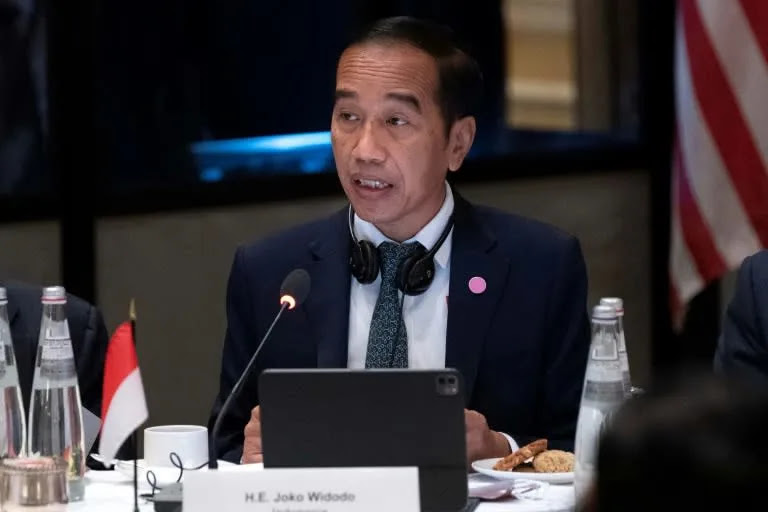
Widodo has pledged to bring reform to Indonesia

Ban appeals to Indonesia to stop death row executions

Ban appeals to Indonesia to stop death row executions
United Nations Secretary General Ban Ki-moon has pleaded to Indonesia to stop the execution of prisoners on death row for drug crimes. AFP PHOTO

Pope: 'Death penalty represents failure' – no 'humane' way to kill a person

Pope: 'Death penalty represents failure' – no 'humane' way to kill a person
The pope wrote that the principle of legitimate personal defense isn’t adequate justification to execute someone. Photograph: Zuma/Rex

Obama becomes first president to visit US prison (US Justice Systems / Human Rights)

Obama becomes first president to visit US prison   (US Justice Systems / Human Rights)
US President Barack Obama speaks as he tours the El Reno Federal Correctional Institution in El Reno, Oklahoma, July 16, 2015 (AFP Photo/Saul Loeb)

US Death Penalty (Justice Systems / Human Rights)

US Death Penalty (Justice Systems / Human Rights)
Woman who spent 23 years on US death row cleared (Photo: dpa)


.

.
"The Recalibration of Awareness – Apr 20/21, 2012 (Kryon channeled by Lee Carroll) (Subjects: Old Energy, Recalibration Lectures, God / Creator, Religions/Spiritual systems (Catholic Church, Priests/Nun’s, Worship, John Paul Pope, Women in the Church otherwise church will go, Current Pope won’t do it), Middle East, Jews, Governments will change (Internet, Media, Democracies, Dictators, North Korea, Nations voted at once), Integrity (Businesses, Tobacco Companies, Bankers/ Financial Institutes, Pharmaceutical company to collapse), Illuminati (Started in Greece, with Shipping, Financial markets, Stock markets, Pharmaceutical money (fund to build Africa, to develop)), Shift of Human Consciousness, (Old) Souls, Women, Masters to/already come back, Global Unity.... etc.) - (Text version)

… The Shift in Human Nature

You're starting to see integrity change. Awareness recalibrates integrity, and the Human Being who would sit there and take advantage of another Human Being in an old energy would never do it in a new energy. The reason? It will become intuitive, so this is a shift in Human Nature as well, for in the past you have assumed that people take advantage of people first and integrity comes later. That's just ordinary Human nature.

In the past, Human nature expressed within governments worked like this: If you were stronger than the other one, you simply conquered them. If you were strong, it was an invitation to conquer. If you were weak, it was an invitation to be conquered. No one even thought about it. It was the way of things. The bigger you could have your armies, the better they would do when you sent them out to conquer. That's not how you think today. Did you notice?

Any country that thinks this way today will not survive, for humanity has discovered that the world goes far better by putting things together instead of tearing them apart. The new energy puts the weak and strong together in ways that make sense and that have integrity. Take a look at what happened to some of the businesses in this great land (USA). Up to 30 years ago, when you started realizing some of them didn't have integrity, you eliminated them. What happened to the tobacco companies when you realized they were knowingly addicting your children? Today, they still sell their products to less-aware countries, but that will also change.

What did you do a few years ago when you realized that your bankers were actually selling you homes that they knew you couldn't pay for later? They were walking away, smiling greedily, not thinking about the heartbreak that was to follow when a life's dream would be lost. Dear American, you are in a recession. However, this is like when you prune a tree and cut back the branches. When the tree grows back, you've got control and the branches will grow bigger and stronger than they were before, without the greed factor. Then, if you don't like the way it grows back, you'll prune it again! I tell you this because awareness is now in control of big money. It's right before your eyes, what you're doing. But fear often rules. …
Showing posts with label Joko Widodo. Show all posts

Wednesday, October 19, 2022

Indonesia to demolish football stadium where crush killed 133

Rfi – AFP, 18 October 2022 

Gianni Infantino vowed to help the Indonesian government "reform and
transform" the country's football ADEK BERRY AFP

Jakarta (AFP) – The Indonesian football stadium where a stampede killed 133 people will be torn down and rebuilt, President Joko Widodo said Tuesday, as the head of FIFA pledged to help "reform and transform" the sport in the country. 

Gianni Infantino met Widodo in the capital Jakarta, just over two weeks after the tragedy, and a year before the Under-20 World Cup is due to be held in the Southeast Asian nation. 

More than 40 children were among those killed in the city of Malang, East Java on October 1, in what Infantino described as "one of the darkest days for football". 

After supporters invaded the pitch at the end of a league match between Arema FC and rivals Persebaya Surabaya, police fired tear gas into packed stands, sparking a stampede. 

"For Kanjuruhan stadium in Malang, we will demolish and rebuild it according to FIFA standards," Widodo told reporters. 

He said the replacement stadium will have "proper facilities that can ensure the safety of both players and supporters". 

"We will reform and transform football in this country," Infantino added, flanking Widodo. 

His assurances came as hospital officials said a 33-year-old man had died from injuries sustained in the crush, bringing the confirmed death toll to 133. 

"What I can guarantee to all the people of Indonesia: FIFA is here with you, FIFA is here to stay, FIFA is here to work in a very close partnership with the government, with the Asian Football Confederation and with the federation of Indonesia," Infantino said. 

The main focus would be improving stadium operations and fan behaviour, he added, as well as creating programmes for football in schools. 

"We will bring our experts, we will help and invest and we will make sure that Indonesia shines on the global football stage." 

Widodo said he agreed with FIFA "on a thorough transformation of Indonesian football to ensure all aspects of the matches follow the international safety standards". 

Safety review

The gates at the 42,000-capacity Kanjuruhan stadium, which was opened in 2004, were big enough to fit only two people at a time and some were not open when the disaster struck, officials have said. 

Infantino said FIFA would work with the Indonesian government to ensure the Under-20 World Cup can go ahead safely. 

The youth tournament is scheduled to take place in May-June 2023, in multiple cities across the archipelago nation. 

Three police officers are among six people who have been charged over the tragedy. 

An investigating task force has called on the country's football association chief and all of its executive committee members to resign. 

It also found that more than three hours of footage from CCTV in the main lobby and parking area of the stadium had gone missing. 

Representatives from FIFA and the Asian Football Confederation (AFC) have been in Jakarta since last week to investigate what happened, along with the national FA and the government. 

Widodo has suspended all football matches until the probe is complete and ordered a safety review of all stadiums.

Monday, June 27, 2022

Indonesian president to meet Zelensky and Putin to urge peace talks

Yahoo – AFP, 26 June 2022 


Indonesian President and G20 chairman Joko Widodo set off on Sunday to Europe where he said he plans to visit Russia and Ukraine and meet with the countries' leaders to urge peace talks. 

Widodo departed for Germany to attend as a guest for the G7 summit from June 26 to 27, and he will then go to the Ukraine capital Kyiv to meet President Volodymyr Zelensky. 

"The mission is to ask... President Zelensky to open a dialogue forum for peace, to build peace because the war has to be stopped," he told a press conference in Jakarta. 

The two leaders will also discuss the food supply chain "that needs to be reactivated" soon, Widodo said. From Kyiv, Widodo is scheduled to visit Moscow and meet with Russia's Vladimir Putin. 

The visit to Moscow is planned for June 30, Indonesian authorities said earlier. 

"With the same mission, I will ask President Putin to open a dialogue and to immediately have a ceasefire and to stop the war," he said. Earlier in April Widodo announced he had called Zelensky and invited him to join world leaders at G20 Summit in Bali in November 2022 as a guest. 

Indonesia holds the rotating presidency of the G20 this year and has been pressured by Western countries, led by the United States, to exclude Russia from the meeting. 

Widodo, however, did not rescind the invitation to Russia and said that Putin has expressed his intention to attend the November summit. 

Indonesia, like most major emerging economies, has tried to maintain a neutral position and has called for a peaceful resolution to the months-long conflict. 

Widodo refused to send weapons to Ukraine in response to a request from Zelensky, instead offering humanitarian aid. 

After concluding the European visit, Widodo will head to the United Arab Emirates before returning to Indonesia.

Saturday, June 25, 2022

Indonesian designer's wheels behind leaders' bamboo bike bromance

Yahoo – AFP, Marchio GORBIANO, June 24, 2022 

As Indonesian President Joko Widodo led Anthony Albanese around the lush gardens of a presidential palace south of Jakarta earlier this month, he presented the new Australian prime minister with an unusual gift: a bamboo bike. 

The night before, designer Singgih Susilo Kartono learned it would be the Spedagi model he crafts in a small village on the island of Java that the leaders would ride side-by-side in a unique moment of bicycle diplomacy. 

Prime Minister Albanese would tuck his trousers into his socks after the statesmen stripped off their jackets and ties and donned helmets, setting off on the light and environmentally friendly two-wheelers for the symbolic bike ride. 

The 54-year-old designer told AFP the diplomatic gesture was a "special, magical moment" for him after years spent working on the bike. 

"It's not about the bike being bought by Jokowi, but the fact that it was used to welcome PM (Albanese)," he said. 

When not arming world leaders with new bamboo wheels, Kartono is using his sustainable bike craftsmanship to bring jobs to locals and show Indonesian villagers how they can make use of the environment around them.


"I train youths here who lack skills. We have a system to train unskilled people until they can create quality products," he said. 

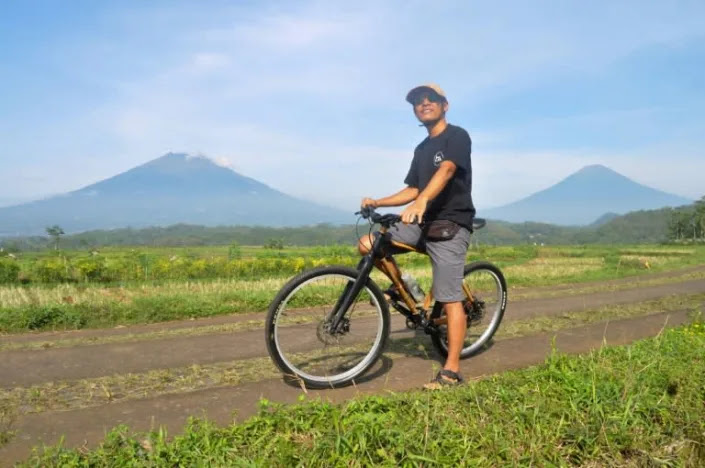
The model, named after the Indonesian words "sepeda" for bicycle and "pagi" for morning, is built by a team of 15 employees at a workshop in Kartono's village in Central Java, where he saddles up for his own bike ride every day. 

Fast-growing bamboo stalks are cut by his team, coated with preservatives, dried, then laminated before being combined with other parts to assemble the sturdy bike frame. 

Pound for pound, bamboo is as strong as steel when used in lightweight structures, studies have shown, with a high tensile strength that makes it a worthy and environmentally friendly substitute. 

A fully assembled Spedagi bamboo bike can take a week of intricate work, fetching up to 15 million rupiah ($1,000), and some have been sold as far away as Japan, company co-founder Tri Wahyuni told AFP. 

Friendship on wheels

The green wheels used by the two leaders were built with more expensive parts, said Kartono, declining to disclose the price of their rides. 

Widodo, famous at home for gifting bikes to ordinary Indonesians, is a Spedagi fan and bought one personally from Kartono in 2015. 

Albanese was similarly beaming about the bike, taking it back to Canberra and saying people would see him on the streets riding what might be "the only bamboo bike" in the Australian capital. 

Both bicycles and bamboo -- affordable and plentiful in Indonesia -- are closely linked with the archipelago nation's lower classes, something that struck a chord with the two leaders from humble backgrounds. 

But while the Kartono creation merged two symbols of Indonesian heritage, it is now tied to a blossoming bromance cultivated in the first weeks of Albanese's premiership. 

"Every time I ride on the bike, I will remember the friendship with President Widodo," he said. 

With his own creation now crossing the Pacific, Kartono said it was seeing bamboo bikes being made where the plant is rarely found -- such as in northern Europe -- that first motivated him to craft his design. 

"When I dug deep into bicycle products online, I found that bamboo bicycles are made in countries that do not have bamboo. That served as a slap for me," said the entrepreneur. 

"Bamboo is everywhere around my house."

Thursday, March 12, 2020

Building an equal partnership of mutual respect

The Jakarta Post, Retno LP Marsudi, Foreign Minister of Indonesia, Jakarta,March 11, 2020
President Joko Widodo (right) accompanied by First Lady Iriana Joko Widodo (second left)
and Dutch King Willem Alexander (second right) accompanied by Queen Maxima planting
trees during a state visit to Bogor Palace, West Java, Tuesday (10/3/2020). (Antara/
Sigid Kurniawan)

“The ongoing global economic and geopolitical volatility will not keep Indonesia and the Netherlands from advancing their long-standing cooperation” — that may be the right tone to begin the narrative on the state visit of King Willem-Alexander and Queen Maxima to Indonesia.

On Tuesday, President Joko “Jokowi” Widodo greeted the Dutch king and queen at Bogor Palace in West Java.

The visit sends the clear message that the two countries aspire to advance their ties going forward. It will surely create a new momentum for the Indonesian-Dutch partnership. The visit also instils not only increased confidence of Dutch investment in Indonesia but also strategic trust in the long run.

The visit produces numerous concrete deliverables in various sectors at the government-to-government as well as the business-to-business level. These include eight government initiatives in important sectors such as sustainable palm oil production, cooperation on infectious diseases control, waste management, the circular economy, water management, aviation cooperation, capacity-building of healthcare professionals, as well as women, peace and security.

On the business side, the king’s 190-strong business delegation has met with hundreds of Indonesian business counterparts and concluded investment and business deals amounting to US$1 billion. These include agreements on dairy products, oil and gas, agriculture, infrastructure and renewable energy.

However, these achievements did not come overnight. In fact, in the last seven decades, both sides have taken significant steps to strengthen bilateral ties.

I was the Indonesian ambassador in The Hague in 2013, when Indonesia and the Netherlands signed a joint declaration on a comprehensive partnership that laid out the modalities for concrete cooperation. This was an important building block to mature our bilateral cooperation into what we have today and what we will harvest tomorrow.

After more than 70 years, it is undeniable that the bond between the two countries has had its share of challenges. While we cannot deny the past of Indonesia-Netherlands relations, we can choose to fully capitalize on the potential of future cooperation for the benefit of both nations.

Read also: A time to remember

Therefore, the goal for our shared future must be clear, which is pursuing a forward-looking partnership that really benefits both countries and peoples.

There are three things that the two countries should advance together to attain common goals for a solid and mutually beneficial partnership.

First and fundamentally, both countries must remain committed to the common values of mutual respect and principles of sovereignty and territorial integrity.

Second, the Indonesian-Dutch partnership must produce long-term and concrete economic benefits for our two peoples.

The Netherlands is and should continue to be Indonesia’s strategic partner for trade and investment. In 2019, the Netherlands was Indonesia’s largest investment partner in the European region, the second-largest trading partner and the fourth-largest tourism partner.

Our political solidarity in furthering the common cause of sustainability is also strong. In promoting sustainable palm oil in Europe, for instance, it is evident that we can rely on the Netherlands as our friend. Last year, together with my colleague, Sigrid Kaag, the Dutch minister for foreign trade and cooperation development, we signed a memorandum of understanding (MoU) on joint production of sustainable palm oil in New York, the United States. King Willem-Alexander’s current visit has also brought an impetus toward the progression of sustainable production of palm oil through the conclusion of a technical arrangement that will focus on capacity-building for Indonesian smallholder farmers.

This is a good reflection of how trust is an important pillar of bilateral cooperation, as also exemplified through the Netherlands’ support in the establishment of the Indonesia-European Union Voluntary Partnership Agreement on Forest Law Enforcement, Governance and Trade in 2016.

Third, Indonesia and the Netherlands must continue to promote the universal common values of multilateralism, diplomacy and democracy, promoting habits of dialogue and peaceful dispute settlement to tackle shared global challenges amid rising tensions, intolerance and unilateralism.

Peacekeeping and counterterrorism are among our signature areas of collaboration on the world stage.

Indonesia and the Netherlands were among the core countries facilitating and supporting the Untied Nations' secretary-general’s Action for Peacekeeping (A4P) initiative to rally member states and other crucial stakeholders to fulfil their obligation in strengthening UN peacekeeping operations.

Both nations also need to stand shoulder to shoulder in the global fight against terrorism and violent extremism.

Deepening the promotion of democracy, pluralism and tolerance are other important areas of cooperation to further develop. The Bali Democracy Forum could become the platform to jointly advance these shared values.

Women, peace and security shall be another hallmark of our bilateral cooperation. The partnership aspires to deepen the capacity of women to promote peace and security, in line with the formation of the ASEAN Women Mediators Network and the Afghanistan-Indonesia Women Network last March.


In conclusion, another historical step was taken with the king of the Netherlands’ visit to Indonesia, in the very year when Indonesia celebrates its 75th year of independence.

The history binding our two countries together is not an easy one. This dark period should not be repeated in the future.

King Alexander stated that “today, we warmly congratulate the people of Indonesia as you celebrate 75 years of independence. The past cannot be erased and will have to be acknowledged by each generation in turn.” King Alexander also expressed his regret and apologized for excessive violence on the part of the Dutch in those years.

Let us together build a better and stronger relationship, one that is based on mutual respect and mutual interests.

Disclaimer: The opinions expressed in this article are those of the author and do not reflect the official stance of The Jakarta Post.

King Willem-Alexander and Indonesian president Joko Widodo. Photo: AP Photo/
Achmad Ibrahim, Pool 

Related Articles:


From left, Dutch Queen Máxima Zorreguieta Cerruti, Dutch King Willem-Alexander, 
President Joko Widodo and Education and Culture Minister Nadiem Makarim observe 
Prince Diponegoro's golden kris at the Bogor Palace in Bogor, West Java, on Tuesday. 
(Antara Photo/Sigid Kurniawan)

Tuesday, March 10, 2020

Dutch King Returns Prince Diponegoro's Golden Kris to Jokowi

Jakarta Globe, 10 March 2020

From left, Dutch Queen Máxima Zorreguieta Cerruti, Dutch King Willem-Alexander, 
President Joko Widodo and Education and Culture Minister Nadiem Makarim observe 
Prince Diponegoro's golden kris at the Bogor Palace in Bogor, West Java, on Tuesday. 
(Antara Photo/Sigid Kurniawan)

Jakarta. After nearly two centuries, a golden kris belonging to Indonesia's national hero Prince Diponegoro was returned by the Dutch King Willem-Alexander, here on a three-day state visit with Queen Máxima and a 130-strong delegation, to President Joko "Jokowi" Widodo at the Bogor Palace on Tuesday.

The golden kris was placed in a glass box not far from the podium where President Jokowi and King Willem-Alexander held a joint press statement.

Education and Culture Minister Nadiem Makarim was seen explaining how the golden kris came into Dutch hands to the President and the King.

The Dutch government had returned several of Prince Diponegoro's belongings in 1968, but the golden kris was not included. 

The kris was reportedly lost but was later found at the Volkenkunde Museum in Leiden.

A team of Dutch and Indonesian researchers has confirmed the authenticity of the golden kris.

Prince Diponegoro was a Javanese royal, the eldest son of Sultan Hamengkubuwono III of Yogyakarta, who led a crusade against Dutch colonial rule in the 1825-1830 Java War.

The war, in which 200,000 people died including 8,000 Dutch, ended with the prince's capture on March 28, 1830.

His famous golden kris was seized by the Dutch government during his famous capture when he was tricked into a fake negotiation – the subject of one of Indonesian painter Raden Saleh's most well-known paintings.

Colonel Jan-Baptist Cleerens gave Prince Diponegoro's golden kris as a gift to King Willem I in 1831.

Apart from returning the heirloom to Indonesia, the Dutch royal visit is intended to increase bilateral cooperation between Indonesia and the Netherlands.

"This is an excellent opportunity to work together for a future relationship between Indonesia and the Netherlands," King Willem-Alexander said.


Dutch monarch offers apology for past ‘excessive violence’

The Jakarta Post, Marchio Irfan Gorbiano, March 10, 2020

Dutch King Willem-Alexander (second right) and Queen Maxima (right) return after
laying a wreath during their visit to the Heroes Cemetery in Jakarta on March 10.
King Willem-Alexander and Queen Maxima of the Netherlands are on a five-day
visit to Indonesia, a former Dutch colony. ( AFP/BAY ISMOYO)

Dutch King Willem-Alexander has offered an apology over "excessive violence" suffered by Indonesians during the early years of Indonesian independence, acknowledging the period as a "painful separation".

The statement was conveyed by the king after he and Queen Maxima were hosted by President Joko "Jokowi" Widodo in an official ceremony at the Bogor Palace in West Java on Tuesday.

"In line with earlier statements by my government, I would like to express my regret and apologies for the excessive violence on the part of the Dutch in those years," Willem said during a joint press statement on Tuesday.

"And I do so in the full realization that the pain and sorrow of the families affected continue to be felt today."

Willem's statement reversed previous Dutch monarchs’ stance of refusing to apologize for the nation’s past war crimes in the country. During the last state visit by a Dutch monarch in 1995, Queen Beatrix was prevented by then-prime minister Wim Kok from offering an apology, saying the Netherlands was not ready.

Indonesia declared independence on Aug. 17, 1945, but the Dutch only recognized its sovereignty on Dec. 27, 1949.

The Dutch government had apologized several times for its colonial troops’ war crimes conducted between 1945 and 1949 in Indonesia.

In 2013, then-Dutch ambassador to Indonesia Tjeerd de Zwaan addressed an apology to 10 widows of men who were summarily executed in a series of mass killings in South Sulawesi between December 1946 and February 1947 during military operations by Dutch troops under Raymond Pierre Paul Westerling.

The king’s four-day state visit kicked off on Tuesday. It went ahead despite the recent announcement of 19 confirmed COVID-19 cases in Indonesia.

The Dutch king also expressed his desire to see a stronger tie between Indonesia and the Netherlands.

"Indonesia has a long tradition of religious tolerance and can play a constructive part in this respect. It's important to continue working together to foster peace, justice and the protection of minorities based on respect for sovereignty and territorial integrity," King Willem-Alexander said.

"And we are keen to work together with you toward this end."

Speaking before Willem, Jokowi emphasized the need for the two countries to forge ahead in a relationship of mutual respect.

"Of course, we cannot erase the history, but we can learn from the past. It serves as a lesson for our commitment to grow a relationship that is equal and with mutual respect and mutually-beneficial," the President said.

Tuesday, February 4, 2020

Indonesians protest use of island for virus quarantine

Yahoo – AFP, February 3, 2020

Health officials disinfect the evacuees from Wuhan, who will be quarantined on
the island of Natuna for two weeks (AFP Photo/HANDOUT)

Hundreds of residents of a remote Indonesian island protested Monday at the government's decision to use it to quarantine evacuees from the Chinese city at the epicentre of the coronavirus outbreak.

Indonesia has evacuated 237 citizens and one foreign national, married to an Indonesian, from Wuhan.

The evacuees, mostly students, landed Sunday and will be quarantined for 14 days on Natuna island, which lies between Borneo and Peninsular Malaysia.

"The government's decision to quarantine Indonesians who returned from China has made people feel uneasy, so we strongly reject it," Fadillah, one of the protesters who like many Indonesians goes with one name, told AFP.

The protesters, wearing green surgical masks, demonstrated in front of the local parliament building, demanding the local authorities relocate the evacuation centre away from a residential area.

"Whatever the reason and the explanation, we don't believe it. We believe this virus is very dangerous for people in Natuna," Fadillah said.

In response to the growing protest on the island, President Joko Widodo said the returnees had to be quarantined to ensure they were in good health before they can return home.

"Those people are healthy, however several stages are needed in health protocol before they can be returned to their family," Widodo said.

Following the evacuees' arrival on Natuna, the local government has shut down schools for two weeks and urged students to limit outdoor activities.

The coronavirus epidemic has infected more than 17,000 people across China and reached 24 nations, although Indonesia has not reported any confirmed cases so far.

Thursday, September 26, 2019

Indonesia police fire tear gas at students protesting sex, graft laws

Yahoo – AFP, September 24, 2019

Protesters set fires and threw rocks at riot police in Makassar on Sulawesi
island to protest against a new criminal code law (AFP Photo/DAENG MANSUR)

Jakarta (AFP) - Police fired tear gas and water cannon to disperse protesters outside Indonesia's parliament Tuesday as thousands demonstrated nationwide against a new criminal code that would, among other things, outlaw pre-marital sex and weaken the country's anti-graft agency.

Protesters covered their faces and scattered in all directions as chaos erupted in the centre of the sprawling capital, Jakarta.

Police also fired teargas at rock-throwing protesters in Makassar on Sulawesi island, while demonstrators broke down a barrier outside the governor's office in Semarang on Java island.

"(We) forcibly dispersed student because they were carrying out anarchist acts, damaging government property and throwing stones at police," said Dicky Sondani, a South Sulawesi police spokesman.

The police action came after flag- and placard-waving demonstrators gathered 
across the Southeast Asian archipelago (AFP Photo/ADEK BERRY)

The police action came after flag- and placard-waving demonstrators gathered across the Southeast Asian archipelago -- including in cultural capital Yogyakarta and holiday hotspot Bali -- for a second day in a row.

On Tuesday, lawmakers debated a wide-ranging legal overhaul including hundreds of new laws that would criminalise pre-marital sex, restrict sales of contraceptives, make it illegal to insult the president, and toughen the Muslim majority country's blasphemy laws.

"We want the bill which is being debated to be revised," said Jakarta university student Amel.

"The police were excessive teargassing us. We weren't being violent," he added.

A vote on the bill was originally scheduled for Tuesday, but President Joko Widodo last week called for a delay in passing the proposed changes after a public backlash.

Riot police used water cannon against protesters in Sulawesi (AFP Photo/
Andri SAPUTRA)

The mooted changes could affect millions of Indonesians, including gay and heterosexual couples who might face jail for having sex outside wedlock, or having an affair.

Widodo's call for a delay came as the Australian embassy in Jakarta issued a fresh travel advisory, warning that the legislation could put unmarried foreign tourists in the crosshairs.

Millions of tourists visit Bali and other beach destinations in the Southeast Asian nation.

Widodo this week stood firm on plans to pass a separate bill that critics fear would dilute the investigative powers of the corruption-fighting agency -- known as the KPK -- including its ability to wire-tap suspects.

The police action came after flag- and placard-waving demonstrators gathered 
across the Southeast Asian archipelago (AFP Photo/ADEK BERRY)

Updating Indonesia's criminal code, which dates back to the Dutch colonial era, has been debated for decades and appeared set to pass in 2018 before momentum fizzled out.

A renewed push this year, backed by conservative Islamic groups, was met with a wave of criticism over what many saw as a draconian law that invaded the bedrooms of a nation with some 260 million people -- the fourth most populous on Earth.

An online petition calling for the bill to be scrapped garnered half a million signatures, while hundreds of thousands took to social media to vent their frustration.

Tuesday, September 17, 2019

Indonesia arrests nearly 200 over raging forest fires

Yahoo – AFP, September 16, 2019

The fires -- usually started by illegal burning to clear land for farming -- have
unleashed choking haze across Southeast Asia (AFP Photo/ADEK BERRY)

Indonesia has arrested nearly 200 people over vast forest fires ripping across the archipelago, police said Monday, as toxic haze sends air quality levels plummeting and sparks flight cancellations.

Jakarta has deployed thousands of personnel to battle blazes that are turning land into charred landscapes and consuming forests in Sumatra and Borneo islands, where thousands of schools have been shut over health fears.

The fires -- usually started by illegal burning to clear land for farming -- have unleashed choking haze across Southeast Asia, triggering diplomatic tensions with Indonesia's neighbours.

On Monday, authorities said they had arrested some 185 people suspected of being involved in activities that led to out-of-control fires sweeping the country.

"Indonesian Police will enforce the law against anyone who is proven to have carried out forest and land burning, whether it was done intentionally or through negligence," National Police spokesman Dedi Prasetyo told reporters in Jakarta.

Indonesia's peat fires: a smouldering problem (AFP Photo/John SAEKI)

"This is a last resort. The most important thing is prevention."

Four corporations were also being investigated, he added.

Last week, Indonesia sealed off dozens of plantations where smog-belching fires were blazing, and warned that owners -- including Malaysia and Singapore-based firms -- could face criminal charges if there was evidence of illegal burning.

Some of the most serious fires occur in peatlands, which are highly combustible when drained of water to be converted into agricultural plantations.

Thick haze in Borneo -- where air quality levels have plummeted to "dangerous" levels in some areas -- caused the cancellation of about a dozen flights Sunday, national airline Garuda said.

Rival Lion Air said about 160 Borneo flights had been affected at the weekend.

Meanwhile, nearly 150,000 people have been treated for acute respiratory infections linked to the haze in recent months, according to Indonesian health authorities.

Nearly 150,000 people have been treated for acute respiratory infections 
linked to the haze in recent months (AFP Photo/Str)

While forest fires are an annual problem, the situation this year has been worsened by drier weather in Indonesia, with diplomatic tensions soaring as toxic smog drifts over to neighbouring Malaysia and Singapore.

The haze pushed Singapore's air quality to unhealthy levels for the first time in three years at the weekend.

In 2015, Indonesia suffered its worst forest fires for almost two decades, which dramatically increased its greenhouse gas emissions.

Huge fires tearing through the Amazon are also compounding concerns about the long-term impact of such blazes on keeping global temperature levels stable.

Related Articles:

Singapore air 'unhealthy' ahead of F1 race


Tuesday, August 27, 2019

Indonesia picks Borneo island for new capital

Yahoo – AFP, August 26, 2019

Indonesia wants to move its capital from congested Jakarta to a new
purpose-built city in east Kalimantan (AFP Photo/BAY ISMOYO)

Indonesia will move its capital to the eastern edge of jungle-clad Borneo island, President Joko Widodo said Monday, as the country shifts its political heart away from congested and sinking megalopolis Jakarta.

The proposed location -- near the regional cities of Balikpapan and Samarinda -- is an area at "minimal" risk of natural disasters, where the government already owns some 180,000 hectares (445,000 acres) of land, he added.

"The location is very strategic -- it's in the centre of Indonesia and close to urban areas," Widodo said in a televised speech.

"The burden Jakarta is holding right now is too heavy as the centre of governance, business, finance, trade and services," he added.

The announcement ends months of speculation about whether Widodo would follow through on the long-mooted plan -- it was floated by the newly independent country's founding father Sukarno more than half a century ago.

Map of Indonesia showing approximate area of the proposed 
site of the country's new capital. (AFP Photo/AFP)

Shifting from problem-plagued Jakarta would also transfer Indonesia's power base off Java island, where about half of the sprawling archipelago's 260 million people live.

"Moving the capital off Java is a gesture that aims to solidify unity," said Jakarta-based political risk analyst Kevin O'Rourke.

"Jakarta will continue to be a megacity -- as a centre for finance and commerce -- for a few more decades, but ultimately it is at severe risk to climate change," he added.

A bill for the proposed move will now be presented to parliament, Widodo said.

Building is set to begin next year with the move of some 1.5 million civil servants slated to begin by 2024, at a cost of 466 trillion rupiah ($33 billion), officials said.

Orangutans, mining

Known as Kalimantan, Indonesia's section of Borneo -- the island it shares with Malaysia and Brunei -- is home to major mining activities as well as rainforests, and is one of the few places on Earth with orangutans in their natural habitat.

The area around Samboja, Kutai Kartanegara, is one of two locations in 
Eastern Kalimantan chosen as a possible site for the new capital (AFP Photo/
Fachmi RACHMAN)

Environmentalists expressed concerns the capital city move could threaten endangered species.

"The government must make sure that the new capital is not built in a conservation or protected area," said Greenpeace Indonesia campaigner Jasmine Putri.

The region has also been blanketed in choking haze from annual forest fires that ravage vast swathes of land.

"That makes Kalimantan unfit as a candidate for a new capital city," said Jakarta-based urban planning expert Nirwono Joga.

"And the move won't necessarily free Jakarta of problems like flooding, traffic jams and rapid urbanisation," he added.

Map showing the tidal inundation of Jakarta in 2012 and projected 
expansion in 2025 and 2050. (AFP Photo/Janis LATVELS)

Concerns have soared over the future of Jakarta -- a city nicknamed "the Big Durian" after the pungent, spiky fruit that deeply divides fans and detractors.

Built on swampland, the city is one of the fastest-sinking cities on earth, with experts warning that one third of it could be submerged by 2050 if current rates continue. The problem is largely linked to excessive groundwater extraction.

But the city of 10 million -- a number that bloats to about 30 million with surrounding satellite cities -- is also plagued by a host of other ills, from eye-watering traffic jams and pollution to the risk of earthquakes and floods.

Indonesia is not the first Southeast Asian country to move its capital.

Myanmar and Malaysia have both moved their seat of government, while Brazil, Pakistan and Nigeria are among the nations that have also shifted their capital cities.