Indonesia executes six drug convicts, five of them foreigners

Indonesia executes six drug convicts, five of them foreigners
Widodo has pledged to bring reform to Indonesia

Ban appeals to Indonesia to stop death row executions

Ban appeals to Indonesia to stop death row executions
United Nations Secretary General Ban Ki-moon has pleaded to Indonesia to stop the execution of prisoners on death row for drug crimes. AFP PHOTO

Pope: 'Death penalty represents failure' – no 'humane' way to kill a person

Pope: 'Death penalty represents failure' – no 'humane' way to kill a person
The pope wrote that the principle of legitimate personal defense isn’t adequate justification to execute someone. Photograph: Zuma/Rex

Obama becomes first president to visit US prison (US Justice Systems / Human Rights)

Obama becomes first president to visit US prison   (US Justice Systems / Human Rights)
US President Barack Obama speaks as he tours the El Reno Federal Correctional Institution in El Reno, Oklahoma, July 16, 2015 (AFP Photo/Saul Loeb)

US Death Penalty (Justice Systems / Human Rights)

US Death Penalty (Justice Systems / Human Rights)
Woman who spent 23 years on US death row cleared (Photo: dpa)


.

.
"The Recalibration of Awareness – Apr 20/21, 2012 (Kryon channeled by Lee Carroll) (Subjects: Old Energy, Recalibration Lectures, God / Creator, Religions/Spiritual systems (Catholic Church, Priests/Nun’s, Worship, John Paul Pope, Women in the Church otherwise church will go, Current Pope won’t do it), Middle East, Jews, Governments will change (Internet, Media, Democracies, Dictators, North Korea, Nations voted at once), Integrity (Businesses, Tobacco Companies, Bankers/ Financial Institutes, Pharmaceutical company to collapse), Illuminati (Started in Greece, with Shipping, Financial markets, Stock markets, Pharmaceutical money (fund to build Africa, to develop)), Shift of Human Consciousness, (Old) Souls, Women, Masters to/already come back, Global Unity.... etc.) - (Text version)

… The Shift in Human Nature

You're starting to see integrity change. Awareness recalibrates integrity, and the Human Being who would sit there and take advantage of another Human Being in an old energy would never do it in a new energy. The reason? It will become intuitive, so this is a shift in Human Nature as well, for in the past you have assumed that people take advantage of people first and integrity comes later. That's just ordinary Human nature.

In the past, Human nature expressed within governments worked like this: If you were stronger than the other one, you simply conquered them. If you were strong, it was an invitation to conquer. If you were weak, it was an invitation to be conquered. No one even thought about it. It was the way of things. The bigger you could have your armies, the better they would do when you sent them out to conquer. That's not how you think today. Did you notice?

Any country that thinks this way today will not survive, for humanity has discovered that the world goes far better by putting things together instead of tearing them apart. The new energy puts the weak and strong together in ways that make sense and that have integrity. Take a look at what happened to some of the businesses in this great land (USA). Up to 30 years ago, when you started realizing some of them didn't have integrity, you eliminated them. What happened to the tobacco companies when you realized they were knowingly addicting your children? Today, they still sell their products to less-aware countries, but that will also change.

What did you do a few years ago when you realized that your bankers were actually selling you homes that they knew you couldn't pay for later? They were walking away, smiling greedily, not thinking about the heartbreak that was to follow when a life's dream would be lost. Dear American, you are in a recession. However, this is like when you prune a tree and cut back the branches. When the tree grows back, you've got control and the branches will grow bigger and stronger than they were before, without the greed factor. Then, if you don't like the way it grows back, you'll prune it again! I tell you this because awareness is now in control of big money. It's right before your eyes, what you're doing. But fear often rules. …
Showing posts with label Sustainable. Show all posts

Saturday, June 25, 2022

Indonesian designer's wheels behind leaders' bamboo bike bromance

Yahoo – AFP, Marchio GORBIANO, June 24, 2022 

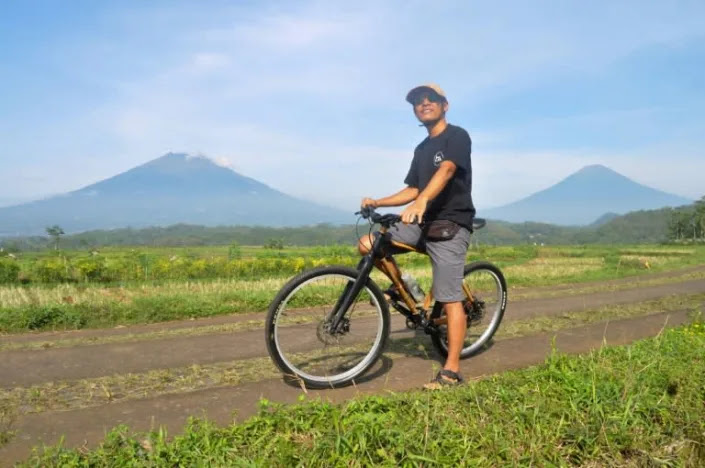
As Indonesian President Joko Widodo led Anthony Albanese around the lush gardens of a presidential palace south of Jakarta earlier this month, he presented the new Australian prime minister with an unusual gift: a bamboo bike. 

The night before, designer Singgih Susilo Kartono learned it would be the Spedagi model he crafts in a small village on the island of Java that the leaders would ride side-by-side in a unique moment of bicycle diplomacy. 

Prime Minister Albanese would tuck his trousers into his socks after the statesmen stripped off their jackets and ties and donned helmets, setting off on the light and environmentally friendly two-wheelers for the symbolic bike ride. 

The 54-year-old designer told AFP the diplomatic gesture was a "special, magical moment" for him after years spent working on the bike. 

"It's not about the bike being bought by Jokowi, but the fact that it was used to welcome PM (Albanese)," he said. 

When not arming world leaders with new bamboo wheels, Kartono is using his sustainable bike craftsmanship to bring jobs to locals and show Indonesian villagers how they can make use of the environment around them.


"I train youths here who lack skills. We have a system to train unskilled people until they can create quality products," he said. 

The model, named after the Indonesian words "sepeda" for bicycle and "pagi" for morning, is built by a team of 15 employees at a workshop in Kartono's village in Central Java, where he saddles up for his own bike ride every day. 

Fast-growing bamboo stalks are cut by his team, coated with preservatives, dried, then laminated before being combined with other parts to assemble the sturdy bike frame. 

Pound for pound, bamboo is as strong as steel when used in lightweight structures, studies have shown, with a high tensile strength that makes it a worthy and environmentally friendly substitute. 

A fully assembled Spedagi bamboo bike can take a week of intricate work, fetching up to 15 million rupiah ($1,000), and some have been sold as far away as Japan, company co-founder Tri Wahyuni told AFP. 

Friendship on wheels

The green wheels used by the two leaders were built with more expensive parts, said Kartono, declining to disclose the price of their rides. 

Widodo, famous at home for gifting bikes to ordinary Indonesians, is a Spedagi fan and bought one personally from Kartono in 2015. 

Albanese was similarly beaming about the bike, taking it back to Canberra and saying people would see him on the streets riding what might be "the only bamboo bike" in the Australian capital. 

Both bicycles and bamboo -- affordable and plentiful in Indonesia -- are closely linked with the archipelago nation's lower classes, something that struck a chord with the two leaders from humble backgrounds. 

But while the Kartono creation merged two symbols of Indonesian heritage, it is now tied to a blossoming bromance cultivated in the first weeks of Albanese's premiership. 

"Every time I ride on the bike, I will remember the friendship with President Widodo," he said. 

With his own creation now crossing the Pacific, Kartono said it was seeing bamboo bikes being made where the plant is rarely found -- such as in northern Europe -- that first motivated him to craft his design. 

"When I dug deep into bicycle products online, I found that bamboo bicycles are made in countries that do not have bamboo. That served as a slap for me," said the entrepreneur. 

"Bamboo is everywhere around my house."

Wednesday, April 13, 2016

Travel firms to brief holidaymakers on their trip’s environmental footprint

DutchNews, April 12, 2016

A Fokker 70 takes off from Schiphol
airport. Photo jvanderwolf via
Depositphotos
Dutch travel firms are to start informing holidaymakers how much environmental damage their trip is doing by listing ‘holiday footprints’ in brochures and on websites, travel sector organisation ANVR says in Tuesday’s Volkskrant

‘We aim to eventually allow consumers to calculate their own holiday footprint via an app or website,’ ANVR spokesman Gerben Hardeman told the paper. ‘We are still a long way off that. But we are now working with a group of travel firms to determine how we can best inform consumers about what we know already.’ 

By helping consumers to realise the impact of their holiday on the environment, holidaymakers can ‘make a responsible choice’, he said. 

Currently, airline passengers can pay extra to offset the cost to the climate of their journey. The amounts vary from €10 to €100, depending on the way the potential damage is calculated by different airlines. 

The system used by the ANVR has been developed by researchers at several hbo colleges and 10 travel firms. It is based on confidential information from airline manufacturers, airlines themselves and the hotel website Booking.com.

Monday, June 29, 2015

Silence Is Golden at Bali’s Silent Retreat


Tabanan, Bali. At a time when life is more fast-paced than ever, where everything demands to be attended at once, it is refreshing at times to just switch off and go inward to listen to the one that needs attention the most — ourselves.

Located in Tabanan, about a one hour drive from Denpasar, the Bali Silent Retreat offers the perfect place to do so. As the name suggests, Bali Silent Retreat creates a safe haven to enjoy the art of silence and nothingness amidst the scenic view in the slopes of Mouth Batu Karu.

Reading a book in silence at
the common lounge
Set in an ashram style, the retreat provides a place of sanctuary for rejuvenation and restoration. Nestled amongst the lush rice paddies and dense tropical jungle at the back, the estate occupies massive four hectares piece of land in the quaint village of Mongan.

Accommodation varies and scattered across the land in between the vegetable & herb garden, meditation bale and labyrinth walk. The wooden bungalow at the front offers complete privacy and solitude, while the single rooms creates comfortable private spaces with an open back door view leading to the jungle.

And for those who enjoy the company of others, separate dormitories of eight for men and women are available. All buildings are constructed from recycled timbers in indigenous architectures that speak true to the retreat’s green principle.

Non-denominational and non-religious, there is no daily schedule of practice set in Bali Silent Retreat. No strict rituals or chanting to be done. Visitors are free to roam around, take part in yoga or daily meditation and venture into the labyrinth and jungle for personal meditation. Only one rule remains: all must be done in silence.

I woke up on my first day at the wee hours of 6 a.m. to take part in the morning meditation. Amidst the early morning fog, a majestic view of Mount Batu Karu on the horizon greets me. A golden mass of rice paddies ready to be harvested spread as far as my eyes can see. The local farmers start their work for the day. Our eyes met, and they smiled. This majestic view and this humble morning ritual itself is enough to bring serenity and calm into my mind.

Breathing deeply, I made my way cutting through the dense vegetation that embraces the retreat pathway into the Octagon Bale where the meditation takes place.

Shaped following the sacred geometry, the Octagon Bale is an open space that hosts the “regular” morning and evening yoga and meditation. Both activities are done under guidance of instructors and are targeted for beginners. Yoga varies from hatha yoga to creative flow yoga that aims to restore and rejuvenate. While meditation technique ranges from mindful meditation, contemplation, to chakra balancing to balance energy and spirit.

Further down the bale, an unusual set up of labyrinth is available for personal meditation. A highly personal experience, the labyrinth walking mediation is a chance to connect within, to ask questions and receive answers. The practice is found in just about every major religious tradition in the world and can be found in all over the world, including throughout Africa, South America, India, Europe, Indonesia, Egypt and North America.

The labyrinth in the Bali Silent Retreat is rather a small one of seven circuits and said to be the only labyrinth meditation available in Bali.

The retreat surrounded by ricefields
Surrounded by the lush greenery of the jungle garden, the labyrinth is cornered by eight piling, Each carries a massive crystal rock on top, while the gate hosts another crystal for vibrational balancing. Upon entering the labyrinth, the meditation begins by following the path; being mindful in each step and feeling each sensation as the feet touch the wet grass and depending on your belief, you can also say a prayer or mantra.

An ancient practice, the labyrinth meditation is said to induce receptive states of consciousness. When you walk a labyrinth, you meander back and forth, turning 180 degrees each time you enter a different circuit. As you shift your direction, awareness is also shifted from right brain to left brain which induces heightened consciousness.

Perhaps, it’s the lush trees, perhaps it’s the fresh open air, but I do feel a sense of freedom as I reached the inner center of the labyrinth and decided to stay there to just soak all the feelings.

And for more restful contemplation, participants can also opt to walk the jungle path that leads the way to the actual village jungle (and with the risk and the thrill of a jungle, including encountering spiders and rat snakes). Another more convenient option would be to join the impromptu rice paddy walk or garden jungle tours that happen serendipitously depending on the availability of the volunteers. These events provide not only the chance to gain more knowledge about the retreat, the village and culture of Bali, but also chance to break the silence for a bit. During these walks, participants are allowed to engage in conversation and ask question to the tour leader as long as it take place outside the retreat compound.

A garden tour provides a great way to understand how the retreat operates. Though resort-like, the retreat is not-for-profit and employs green-measures to the extreme.

“The planet has taken care of us, and thus we need to take care of the planet,” Patricia Miklautsch, the founder of Bali Silent Retreat, said on the philosophy. Together with Sangtu, a Balinese naturalist and co-founder of the retreat, they ensure every component of the retreat employs the most sustainable system as possible.

“All the electricity is generated from solar panel, while the water is derived from water distilling or from the spring. And all the vegetables and herbs are coming from our very own garden jungle. They are being harvested and consumed within three hours, so they’re always fresh,” explained Sangtu. “In a sense, it’s a also a meditation in itself; to know where it comes from and to be conscious on your consumption, be it electricity or food.”

Food is indeed an integral part and one of the major factors which keep the visitors silent in awe. In a garden-to-table style, head chef Simon Jongenotter, along with the five kitchen angels prepare daily buffet of vegetarian lunch and dinner. A practitioner of slow food and conscious eating, Jongenotter introduces “new earth cooking” as a food philosophy in the retreat which entails taking responsibility for sourcing, preparing and eating food in unique and healthy ways. The philosophy is translated into vibrant and healthy meals that keep the guests dedicated in their silence as they keep munching and munching.

Eleonora, a guest from Netherlands shared her experienced: “I loved the peace and quiet combined with yoga and meditation and the food — loved the food; so much variation and never a ‘dull’ meal. My mind is so much more calm and clear, now and the wonderful nature filled my heart with happiness.”

Just like Eleonora, given the absence of distraction, I found myself eating and walking more slowly, noticing the simple movement as the birds flying around which I usually don’t do. And after the third day, it’s apparent that the life in silence is all round rewarding and I began to wish it could last forever.

“That is what happens. People come here, originally for one or two days, and they extend. What I wish is for more people to open their heart to the retreat by making it affordable,” Patricia said smiling.

The saying goes “only in silence can you hear yourself.” In the Bali Silent Retreat, I heard wind gushing, cicada’s singing and birds chirping, and  there, I found peace.

Saturday, June 6, 2015

Bali Top of the Class for Sustainable Innovation and Education

Jakarta Globe, Nadia Bintoro, Jun 05, 2015

Two days of conference panels, hands-on workshops and
project showcases, eco change-makers gathered to showcase
 their practical solutions to Bali’s most urgent environmental
issues. (Photo courtesy of Green School Bali)

Ubud, Bali. Last sunny weekend at the Green School, Sibang Kaja, Ubud, positive vibes wafted thick in the air among students and adults alike during the “Sustainable Solutions: From the Ground up” event. Two days of conference meetings, hands-on workshops and project showcases, the event gathered Bali’s eco change-makers to demonstrate their practical solutions to the island’s most urgent environmental issues.

Co-hosted by the Green School and the United Nations Office for REDD+ Coordination in Indonesia (Unorcid), The “Sustainable Solutions: From the Ground Up,” was held over the last weekend in May and was jam packed with 500 enthusiastic participants including 120 students from the local school.

In addition to raising awareness of existing environmental problems, the event presented the practical solutions to sustainable lifestyle through actions. “Sustainable Development: from the Ground Up” sought to empower individuals by providing a forum for meaningful, engaging discussions and by offering practical, simple daily solutions for living a more environmentally conscious and sustainable life.

The event activities consisted of segments focusing on food, energy and waste management, all aiming to inspire and empower individuals who are ready to take on the challenge of living sustainably.

The Speaker Series highlights a diverse line-up of local and global stakeholders keen on providing solutions to the challenges which come with sustainable development, while the workshops provide a more practical and easy way to reducing the carbon footprint.

In the Solutions Showcase, held in the bamboo architectures which characterizes the Green School, a plethora of vendors presented their eco-products and services. The area filled with curious visitors. Their endless questions drilled the hosts for information on practical ways to implement sustainable lifestyle from the various booths displaying environmental projects, initiatives and educational programs led by local NGOs and youths.

Among them was Biowear which presented an alternative-to-plastic disposable product ranges, including the Eco Bag, the biodegradable, compostable and recyclable bioplastic bags made from cassava roots. The visitors were left in awe upon discovering that the eco-plastic bag is dissolvable in hot air and is harmless if consumed by animals. It is estimated that more than one million sea creatures die every day from plastic entanglement and mistakenly eating plastic bags seen as food.

While in the next-door vestibule in Meranggi Bale, kids from the local schools were attentively glued to their mobile phones to try the new mobile app “Cash for Trash” during the “Sampah punya Harga” (“Trash has value”) workshop. A winner of “Start-up Weekend,” a competition held in Ubud’s creative hub Hubud last November, the “Cash for Trash” app is a mobile app aiming to tackle the problem of inadequate waste management system in Bali through the use of popular technology. Olivier Pouillon and Febri, from the “Cash for Trash” team, led the crowd of expecting participants in downloading the app .

Currently only available for Android phones, “Cash for Trash” is designed to connect users with a pemulung (scavenger) to pick up their recyclable trash at home. Using similar geo-mapping technology employed by other pick-up services Gojek or Uber Taxi, with the “Crash for Trash” app, the user can pinpoint the location and search for the closest pemulung to arrange pick up.

“At first, we developed this app to target the students, because as we know they’re the heavy mobile phone users in Indonesia, but now we see the potential to launch this app to the wider public,” said “Cash for Trash” founder Pouillon. “In giving price to the trash and inform people on the possibility of selling this trash, we want to change the paradigm attached to rubbish, so people will think that throwing rubbish means throwing money so they’d rather sell it through Cash for Trash and recycle.”

The app does not only provide practical solutions for Bali, but also aims to offer inspiration on a global scale. Nilam is one participant who came all the way from Maldives to seek practical solutions to tackle the nation’s mounting trash problem.

“The Maldives is just like Bali, it’s an island nation, so I came today to pick up some ideas on how Bali [solves] environmental problems. And upon learning all these great practical ideas, I’m eager to see which options we can implement in Maldives.”

The solutions on offer were also welcomed by local participants. Made Wangsean, co-founder of Wirausaha Bali, an organization focusing on promoting the welfare of marginalized Balinese communities, commented: “I really appreciate that Green School organized this kind of activity and invited us to get involved. Especially, because many of our projects are focused on sustainable environmental programs for the local communities. We hope that this kind of activity can happen regularly and integrate more locals to find sustainable solutions together.”

Continuing in the spirit of environmentalism, the visitors  then moved to the school’s main hall in Sangkep to engage in the panel talk “New Life for Trash,” attended by Ahmad Djuhara from Djuhara + Djuhara architect firm, Pouillon, Melati and Isabel Wijsen from Bye Bye Plastic Bag campaign, and Herni Hastutie from PPLH Bali.

Each panel member presented their eco-initiatives across various fields to give new meaning and value to trash. Djuhara, a prominent architect based in Jakarta, showcased his projects of designing houses entirely made from left-over and used building materials. His designs are not only unique but solid proof that living sustainably does not need to be expensive.

But to solve today’s pressing environmental issues, you need to get your hands dirty. And dirty it was, as the kids tried to make compost while learning about permaculture from the Kul Kul Farm, held in Green School’s very own vegetable garden. Children as young as 3 years old happily molded soil around beetroot seedlings before planting them.

With laughter echoing around the garden and faces smeared with dirt, the children truly learned about a sustainable lifestyle.

Satya Tripathi, director and executive head of Unorcid, said: “Indonesia’s young people are a powerful force for engendering the changes in values and practices that we need to see in order to achieve sustainable development. Our generation has the responsibility of doing what we can to steer humanity in the right direction, and to provide young people with the tools they need to accelerate along this pathway.”

The Green School aims to assist REDD+ & UNORCID’s initiative to educate one million Green Youth Ambassadors across Indonesia by 2017, putting them at the frontier of green education in Indonesia.

UN Secretary General Ban Ki-moon greets young students in Sibang Kaja,
Bali on Aug. 28, 2014. (Photo courtesy of Green School Bali)


Friday, April 24, 2015

In Mataram Declaration, Belated Recognition of Indigenous Rights

Jakarta Globe, Kennial Caroline Laia,  Apr 23, 2015

The government is finally getting serious about recognizing Indigenous
groups’ forest rights. (Antara Photo/Ahmad Subaidi)

Mataram, West Nusa Tenggara. Proponents of the rights of indigenous groups have hailed a pledge by the Indonesian government to do more to recognize their stewardship of forests, seen as crucial in efforts to stave off deforestation.

Environment and Forestry Minister Siti Nurbaya Bakar made the so-called Mataram Declaration last weekend in a belated response to a May 2013 Constitutional Court ruling relinquishing the state’s default claims to forested areas settled and used by indigenous groups.

“Long before this, civil society organizations and local communities were struggling for the recognition and protection of customary land,” said Abetnego Tarigan, the executive director of the Indonesian Forum for the Environment, or Walhi. “Now the government has shown good faith, and we really appreciate it.”

He said the central and local governments often violated indigenous people’s land rights because the latter lacked title deeds to their land. In many cases, he noted, the people were disenfranchised of their rights, and their land given over to logging, plantation or mining operators.

“There are a few policies that regulate the rights of local communities to the land, such as the 2012 law on customary forests, but they don’t cover the recognition of people’s customary territory, so we need another framework to guarantee it,” Abetnego said. “This declaration should really be a form of political will for all stakeholders to push the recognition and protection of customary forests managed by the people.”

Civic-centered development

At the signing of the declaration on Saturday in Mataram, in West Nusa Tenggara province, Siti said the government and other stakeholders were committed to expediting the process to craft policies that improved the welfare and protection of local communities and conserved the environment.

“These policies are really important,” she said. “President Joko Widodo’s government has indicated that the citizenship concept is a democratic one, in which we seek to bring welfare to the people.”

She said the government was making efforts to involve people, especially indigenous groups, in environmental protection.

“Here, our development must be civic-centered,” Siti said. “This issue has been echoed by the people and environmental organizations, and now the government is listening.”

Under Joko’s 2015-2019 National Mid-Term Development Plan, the administration plans to designate 12.5 million hectares of land for “social forestry,” in which indigenous groups and local communities will commit to sustainable forestry practices, and nine million hectares for agriculture.

“These [social] forests can be developed as community forests, village forests and customary forests,” Siti said, adding that the agricultural land, to be staked out from former logging concessions, would go primarily to subsistence farmers.

Collaborative effort

Siti said it was important for all stakeholders — the central government, regional administrations, civil society organizations and local communities — to work closely together.

“The policy is ready to go, but we can’t do it alone. We need help from other stakeholders to cooperate. For example, I hope the Home Affairs Ministry will help us identify indigenous communities and their problems to ensure that all land is distributed rightly and fairly,” she said.

“We also need civil society organizations to work with the people on mediation, community building and others. Access to welfare for all Indonesians is our responsibility.”

Zudan Arif Fakrulloh, an adviser to the Home Affairs Ministry, said the institution was open to cooperating with the other stakeholders.

“But the identification process isn’t easy. There are a few requirements to meet before we can definitively say that a given community is an indigenous one,” he said. “The process must be really selective. And this is the task of regional leaders.”

Zudan said that for a forest community to qualify, it would have to show some kind of environmentally sustainable practice in its interactions with the forest.

“Here we need experts and help from civil society organizations,” he said.

People first

Siti said the new policy, unlike previous ones, prioritized the role of people in economic development through the exploitation of forests and other natural resources.

“I believe the system will be no longer like the past, when government didn’t put the people at the front of its development plans. Now, we must use dialogue in our approach to developing the economy of this country,” Siti said.

West East Nusa’s Deputy Governor Muhammad Amin welcomed the declaration, but said further talks on the issue were still needed between the central government and regional administrations.

“We realize there hasn’t been a regional policy that recognizes the territorial rights of indigenous people. However, with this declaration, we hope that the people will receive greater consideration in the policy-making process,” he said. “Should the synergy run smoothly, we may be able to achieve an environment-oriented development framework.”

Yansen T.P., the head of Malinau district in North Kalimantan, who was among the more than 30 regional heads attending the Mataram Declaration, said an increasing number of regions across the country were beginning to prioritize land rights protections when crafting new policies.

“We’ve been done a lot for several years now to show our support for our environment,” he said. “We have vast areas of natural resources and considerable local wisdom. The forest we have is the forest we must hold on to. We understand that people depend on the forest and they will try to maintain it. But to do that, we in the regional government have to provide them with legal certainty.”

Yansen said he hoped that future investments would “take the side of the people.”

“We don’t need to exploit all of our natural resources right away. We have to think about our children, grandchildren and our future generations,” he said. “Hopefully the central government’s policy will accelerate the recognition of indigenous people’s right to the forest.”

Test cases

Adi Rozal, the head of Kerinci district in Sumatra’s Jambi province, said his administration had designated 12 swaths of forest as customary forests.

“Now we’re waiting for coordination from the central government to issue a policy that fully mandates the forests for use by the local community,” he said.

Mathius Awoitauw, the head of Jayapura district in Papua province, agreed that while the central government had a key role to play, it was local governments that would serve as the test cases for various frameworks on the issue.

“All we need to do to establish nationwide synergy is to hold regular dialogues to test how capable regional governments and people are in managing their forests. In addition, there should be a regulation that truly guarantees the rights of each region to map its own customary forests,” he said.

In prioritizing the rights of forest-dwelling communities, the government has switched from an earlier paradigm that served large corporations, said Chalil Muhammad, the chairman of the Association for Community and Ecology-Based Law Reform, or Perkumpulan HuMa.

“There’s a need to create a scheme to build rights coordination between the central government, regional governments and the people in an effort to prevent forests from rampant exploitation,” he said. “These stakeholders need to change their mind-set. We need to increase human resource capacity and fix existing forestry policies.”

Edited by Hayat Indriyatno

Saturday, March 21, 2015

In Bali’s Demon Parade, Plastic

Jakarta Globe, Nadia Bintoro, Mar 20, 2015

The artist Made Bayak wants to raise awareness about the unsustainable
 use of plastic in Bali, through his project to build an ogoh-ogoh for Nyepi
the traditional way. (JG Photos/Nadia Bintoro)

As Hindus in Bali prepare to mark the sacred day of Nyepi, or the Day of Silence,  that falls this Saturday, myriad spooky-looking monster effigies, known as ogoh-ogoh, have begun popping up in  villages across the island.

Nyepi marks the start of the New Year in the Balinese Saka calendar, and as such is the most important religious celebration for the island’s Balinese faithful. The celebrations leading up to the day begin with the purification ceremony of Melasti, which takes place three to four days before in a temple by the sea, culminating on the eve of Nyepi with the burning of the ogoh-ogoh.

A representation of evil spirits, ogoh-ogoh are larger-than-life effigies of demons, symbolizing negative elements or malevolent spirits. During the Bhuta Yajna ritual, on the night before Nyepi, the ogoh-ogoh are paraded around each village and then set alight, in a symbolic act of vanquishing all negative elements and restoring the balance between the gods, mankind and nature.

It represents a total cleansing before welcoming Nyepi, a day reserved for self-reflection, when all activities that may hinder such purpose are prohibited. As such, there is no lighting of fires, no working, no entertainment activities and no traveling during Nyepi, with Bali’s airport shut down for the day.

In the past, ogoh-ogoh were made from bamboo and paper. In recent years, though, the artisans who make them have increasingly turned to the more pliable medium of Styrofoam — a choice of convenience, but one that goes against the meaning of Nyepi as a day for getting back in balance with nature.

Local artist Made Bayak is leading a small revolution to take the ogoh-ogoh back to its environmentally conscious roots. He does this by constructing his ogoh-ogoh from plastic waste, to symbolize the true evils that have engulfed the resort island in recent years.

An artist-cum-environmental activist, Bayak hails from Banjar Sakih ward in Gianyar district, and studied at the Indonesia Institute of Arts in Denpasar.

In his third year there he began experimenting with art using plastic as his medium. He went on to exhibit the resulting works in a show titled “Plastiliticum,” an indictment of the “age of plastic” in which he says mankind has mired itself.

“I believe that after the megalithic and paleolithic, mankind is entering the new era of Plastiliticum,” Bayak says.

“If we continue consuming plastics like we do, archaeologists in the future will only dig up plastic as the remnants of our civilization.”

Bayak’s “Plastiliticum” expanded over the years and is now a project titled “Plasticology,” which the artist has been working on for the past five years.

The project has yielded numerous works of art, from paintings to statues, that employ plastic waste and other castoffs that Bayak collected himself from landfills.

To mark Nyepi this year, Bayak is challenging himself to extend the “Plasticology” theme by incorporating an important cultural celebration into his art to create an even bigger momentum in his push for greater awareness.

 “Creating this ogoh-ogoh along the youngsters in my village is my way of campaigning against the trend of making ogoh-ogoh using Styrofoam,” he says.

“It is also a way of educating the youngsters on the dangers of Styrofoam, which releases a toxic smoke when it burns. Even during the sculpting process, the fine Syrofoam grains can be very dangerous if inhaled by the artists.”

Through his ogoh-ogoh, Bayak is also declaring war on the culture of instant gratification that pervades life in Bali in the contemporary age.

“It seems everybody in Bali nowadays is so caught up with the instant lifestyle. They want everything to come quick and easy, and forget about the real essence of the making of ogoh-ogoh,” he says.

“Ogoh-ogoh is essentially a symbol of Bhutakala or the bad traits that people possess. During the Tawur Kesanga ceremony on the night before Nyepi, when people burn the ogoh-ogoh, there’s a term, ‘nyomia,’ which is about turning the traits of Bhutakala into God’s traits.

“So it’s about salvation and how to make something that’s bad good again. This is what I want to achieve with the use of plastic waste in making this ogoh-ogoh. It’s recycling through culture, as I believe Styrofoam and plastic are just another form of the evil Bhutakala.”

With the help of his four nephews and local youths, Bayak is rushing to finish his ogoh-ogoh before Nyepi. The frame is constructed out of bamboo, the body will be padded out with papier-mache using old newspapers, while plastic waste will be used for the outer embellishments and for adding color.

“The challenge was to find the right plastic rubbish to create the artistic coloring that I envision for the surface. I had to visit a lot of landfills in Bali to dig up these treasures,” Bayak says.

He says he hopes this practice of re-using plastic waste will catch on among the people who turn out to watch the ogoh-ogoh parade and the subsequent burning tonight.

Bayak also continues to hold regular exhibitions of plastic-waste art, as well as workshops for local schools and communities, where he teaches children how to make dolls and paintings using plastic waste.

 “These projects are all still self-financed, but I believe art is a useful and effective method to raise awareness of this issue, especially among the kids. It’s important to plant the seeds of reuse and recycle in these little minds,” Bayak says.


Sunday, March 1, 2015

Leave the Kids, Take the Bikini

Discovering a luxury holiday utopia nestled on the crystal clear waters of the Indian Ocean


Club Med Finolhu offers couples and weary city travelers a luxurious holiday
gateway on the azure blue waters of the stunning Maldives islands. (Photo
courtesy of Club Med Finolhu)

It was every shade of blue glimmering under the golden sun. As far as the eye can see, waters so crystal clear one can easily spot baby sharks swimming around among schools of fish.

On a table in the corner was breakfast — a Japanese breakfast menu consisting of freshly baked salmon, rice, soy sauce, seaweed and a bowl of miso soup, with a fruit platter and a bread basket on the side — delivered by a butler whose phone call had woken me up that morning to tell me he had set up my morning meal on the patio while I was asleep. He hoped I didn’t mind.

I set a portable speaker — provided by the hotel — on the table and connected it with my music player so that the tunes of my choice became the soundtrack to the exquisite morning view before me.

Such was the typical morning for guests at Club Med Finolhu, the French resort chain’s newest and first adult-only resort, located in the Maldives.

Known back in the ’80s for its wild, non-stop partying and youthful flare, Club Med today has taken on an almost completely different form, with most of its resort, including those in Indonesia’s islands of Bali and Bintan, catering more and more to families and businesses.

But the establishment of Club Med Finolhu, the resort’s second chain in the Maldives, marks its foray into even newer territories.

Its first Maldives resort, Club Med Kani, located a short five-minute boat ride away from Finolhu, boasts 260 rooms and villas in total, and still has a touch of the Club Med holiday-goers are more acquainted with. Various forms of entertainment — ranging from comedy performances to musicals — is a nightly affair, and both guests and Club Med staff blend together in the parties that typically follow these shows.

The Sunrise Lagoon Villa, with direct access to the shallow waters.
(Photo courtesy of Club Med Finolhu)

At Finolhu, however, the number of rooms is cut down quite significantly. Home to only 52 villas, guests, most of whom are couples on their honeymoon or those taking a break from their daily grind, are guaranteed premium, uninterrupted tranquility and privacy. Every villa is assigned its own butler, who would readily cater to room service requests.

A pathway divides the island into two. One part, which hosts the Sunrise Lagoon Villas and the Sunrise Beach Villas, looks out to where the sun rises every morning — a treat for the early risers.

The other, upon which the Sunset Lagoon Villas and Sunset Beach Villas are located, is where guests can enjoy the crimson Maldivian sunset.

Each villa boasts a spacious bedroom, living room, and shower room, and a private pool with a view of the sea. For guests occupying a lagoon villa, a staircase next to the pool leads right into the shallow water, calling for a dip.

In the resort’s main area, absent is the sound of upbeat, dance music blaring from the speakers I remember from a visit to Club Med Bali last year. All around at the main pool that overlooks the pristine blue waters and a beach, guests are free to sunbathe and relax to soothing, down-tempo music playing. A bar is located just right next to the pool, so that guests are able to maximize on the all-inclusive policy — drinks, food, and activities are covered for in the nightly rate — which Club Med pioneered.

View from the shower room of the resort’s Sunset Lagoon Villa.
(Photo courtesy of Club Med Finolhu)

Going green

The resort’s adult-exclusive policy is not the only thing that sets it apart from its predecessors. Upon reaching the island and walking on the jetty, guests would easily notice solar panels neatly attached on the roof.

“All of the electricity in Finolhu is solar-powered,” Club Med’s country manager for Indonesia Bruno Courbet explains. “There is a lot of sun, although on days when it’s raining and there isn’t enough power, we have a generator to use as backup.”

While popular as a holiday destination, especially among honeymooners, the mention of Maldives over the past few years have not only included tales of its natural beauty, but also its potential to be one of the countries in the world most geographically prone to be affected by climate change and rising water levels.

In December 2004, the Maldives was also one of the countries that had to bear the brunt of the Indian Ocean tsunami, which in the Indonesian province of Aceh saw hundreds of thousands of people killed and missing.

“It was not as bad as Aceh, we did not have a big wave wash over the islands, but the tide was very, very low, my sailing instructor recalled one afternoon as we were slowly leaving the shore on our small sailing boat for four.

“All of these areas were dry, you could see lots of fish jumping around because there was no water,” he says pointing at the waters around us. “After a while, water suddenly kept rising and rising and before you know it our lands were flooded.”

Club Med Kani, built in 2000, was among the holiday destinations affected by this natural disaster.

“All the over-water bungalows were damaged. We closed the village for a few months and rebuilt them,” Bruno says. “We reinforced their structures with concrete [as part of our] prevention [efforts].”

No guests and staffs of the resort were hurt, although electricity was cut off for a while, Bruno explained, adding that sufficient food and water was provided and everyone was evacuated within on week.

A bird's-eye view of the resort. (Photo courtesy of Club Med Finolhu)

With the establishment of Finolhu and its strict use of solar power, Club Med aims to contribute to the environment and the nature that surrounds and sustains both of its Maldives resorts.

“The use of solar-powered electricity is one example of how we can pursue this [as part of our] corporate social responsibility’s direction, particularly so in the Maldives, given its strategic importance in resort destinations,” Bruno adds.

“We hope it will set the benchmark on further development in the Maldives as this country has to be the pioneer of sustainability.”

A snorkeling excursion to several nearby reefs with guests from the resort made it clear just how valuable the surrounding ecosystem was, not only to Club Med, but to the Maldives and its busy tourism industry.

In these deeper waters, colorful fishes I’ve never seen during previous snorkeling trips, swim about in large numbers and feed from the seemingly endless corals. If lucky, one would meet sea turtles, seahorses, and even manta rays. An attempt to count all the different types of fish with my fingers failed, not because my goggles were fogging up, but because one would simply lose track.

Maldives and all of its beauty, above and underwater, proves itself a gem.

Related Article:


Thursday, February 26, 2015

SBY Honored, Along With Companies, for Green Growth

Jakarta Globe, Feb 26, 2015

Susilo Bambang Yudhoyono when he was still president of Indonesia. (EPA
Photo/Bagus Indahono).

Jakarta. Susilo Bambang Yudhoyono was among a diverse group of winners of awards for sustainable business practices whose names were announced on Wednesday evening, with the former Indonesian president receiving praise for “his achievements in developing green growth in Indonesia and his commitments to action on climate change globally.”

A Special Award for Leadership in Green Growth and Development was presented to Yudhoyono at the Shangri La Hotel Jakarta, during a ceremony attended by Vice President Jusuf Kalla, Coordinating Minister for the Economy Sofyan Djalil and other ministers, as well as CEOs, heads of international agencies and media.

“Development and growth is something that needs to be planned carefully. It needs to ensure social inclusiveness. It needs to protect the environment, it needs to correspond to climate challenge, it needs to go on for the long term,” Yudhoyono said at the award ceremony.

The 2014 Sustainable Business Awards Indonesia were organized by Global Initiatives in cooperation with PricewaterhouseCoopers (PwC), the Indonesian Chamber of Commerce and Industry (Kadin) and the Indonesia Business Council for Sustainable Development.

The organizers said in a press release that cement company Holcim Indonesia emerged the overall winner, but companies such as Bank BNI, Astra International, Bukit Asam, Nestle Indonesia, Bumi Serpong Damai and Unilever also won in various categories.

Tony Gourlay, CEO of Global Initiatives, said in the press release: “For the third year in a row, we are pleased to showcase companies in Indonesia who have embedded sustainability in their corporate mission and whose leadership shares this vision. We encourage other companies to follow their lead and communicate their sustainability efforts more widely.”

The complete list of SBA winners

MAIN AWARDS

Overall Winner: Holcim Indonesia

1. Strategy and vision: Unilever Indonesia
2. Workforce: Holcim Indonesia
3. Community: Astra International
4. Energy management: Holcim Indonesia
5. Water management: Bukit Asam
6. Waste & material productivity: Danone Aqua Group
7. Climate Change: Holcim Indonesia
8. Supply Chain: Nestle Indonesia
9. Land Use, Biodiversity and the Environment: Monsanto Indonesia (Branita Sandini)
10. Business Responsibility and Ethics: Unilever Indonesia

* Environmental Disclosure: Dupont Agriculture Products Indonesia

SPECIAL RECOGNITION AWARDS

1. Pioneer in Green Finance in Indonesia: Bank Negara Indonesia
2. Outstanding leadership in sustainable agriculture: Great Giant Pineapple
3. SME placing sustainability at the core of its business: Pulau Nikoi
4. Outstanding Energy Management in the mining sector: Vale Indonesia
5. Outstanding Water Management in the property sector: Bumi Serpong Damai

Special Award for Green Growth & Leadership: Susilo Bambang Yudhoyono


Friday, February 20, 2015

Obama adviser John Podesta's biggest regret: Keeping America in dark about UFOs

Yahoo News, Caitlin Dickson, February 13, 2015

In this Nov. 19, 2014 file photo, Counselor to the President John Podesta speaks in
 Washington, Wednesday, Nov. 19, 2014. In the year that will pass before the 2016 
campaign for president formally kicks off with the votes in the Iowa Caucus, any
 number of candidates, donors, political operatives — and people who have nothing
 to do with American politics — will shape the race for the White House. (AP Photo/
Manuel Balce Ceneta, File)

Outgoing senior Obama adviser John Podesta reflected on his latest White House stint Friday, listing his favorite moments and biggest regrets from the past year. Chief among them: depriving the American people of the truth about UFOs.


Podesta’s longtime fascination with UFOs is well-documented, as his brief political hiatus following four years as President Bill Clinton’s chief of staff freed him up to pursue his otherworldly passion.

At a 2002 press conference organized by the Coalition for Freedom of Information, Podesta spoke on the importance of disclosing government UFO investigations to the public.

“It’s time to find out what the truth really is that’s out there,”  he said. “We ought to do it, really, because it’s right. We ought to do it, quite frankly, because the American people can handle the truth. And we ought to do it because it’s the law.”


Following Podesta’s tweet, Friday, the Washington Post recalled an exchange one of its reporters had with Podesta in 2007. Karen Tumulty had asked Podesta about reports that the Clinton Library in Little Rock, Arkansas, had been bombarded with Freedom of Information Act Requests specifically seeking email correspondence to and from the former chief of staff including terms like “X-Files” and “Area 51.” Podesta’s response, through a spokesperson, was “The truth is out there,” the tagline for the TV show “The X-Files” of which Podesta was known to be a fan.

A 2010 editorial in Missouri’s Columbia Tribune disparaged reports that Podesta had asked an outspoken UFO photographer to stop discussing his knowledge of extraterrestrial activities in public.

“One wonders why Podesta would do such a radical reversal, given his former plea for UFO disclosure,” the editorial implored.

But contrary to the Columbia Tribune’s concerns, Podesta had clearly not abandoned the cause. He wrote an introduction to the 2010 book “UFOs: Generals, Pilots, and Government Officials Go on the Record.”

Unfortunately, Podesta will likely have little time to fill out FOIA requests in his new job at Hillary Clinton’s presidential campaign. Perhaps, as his tweet suggests, he’s passing the torch to New York Times columnist Maureen Dowd.

Related Articles:


"... Question Three: Is there life on other planets?

Are you kidding? There's life everywhere. Everywhere! Right now, your scientists are searching for microbial life on all the planets and their moons in your solar system, and they will eventually find it. They expect to find it. They will eventually understand that the seeds of life are everywhere.

How much life might there be? How long has it been "out there"? When science starts to realize the scope of how long life has been in your galaxy, they will begin to see something counterintuitive to evolution - their own Human history. How old is your Universe? Ask your scientists and they will say about 13 billion years. That's OK. Let's use their numbers. How old is your own planet - 4 or 5 billion, perhaps? Correct. But how old is humanity? Why weren't you here with the dinosaurs? You think the earth wasn't ready? Do you think that perhaps that which controls evolution was a little too stupid to make a Human sooner, but the process could make a dinosaur? Have you ever thought about these things?

If you put the earth's entire history into a 24-hour clock, life itself only started in the last hour and humanity, all of civilization, happened the last few seconds. Isn't that odd to you? Therefore, in a Universe that may be 13 billion years old, you arrived in the last few seconds. Did you ever think maybe you're the newest ones on the block? Well, you'd be right.

If the Universe is really that old, do you think perhaps there are civilizations in your galaxy that might be a billion or more years older than you? If that's the case, do you think perhaps they have gone through anything you're going through? Do you think any of them might have had your DNA attributes? Perhaps they also went through what you are going through spiritually? Perhaps they even went into a quantum ascension status? The answer is dozens of them.

You already know them and you've listed them in your publications. The ones who directly seeded you are called Pleiadians. The ones who seeded them might be Octurian and the ones who seeded them may be even Orion. They're everywhere, and they're all here as well. They're looking at you, for you are the ones who are next, and you are passing this marker of the shift

Oh, dear ones, it's going to be a long time before you really know any of these things to be your reality. The first step is peace on Earth. The next is a new kind of Human evolution that is going to increase your DNA efficiency to 100% and you're going to live a long time. Every time I say that, there are Humans in their intellectual mind saying, "Well, there is a geometric birth rate going on. We're not going to make it. It's going to over-crowd and we are going to run out of food. So what you're saying, Kryon, can't be a good thing. We're all going to be suffering and killing each other for food."

Let me address this, for if that is your thought, Human, you are assuming Humans are stupid and haven't figured out what's going on and why there's so much birth. You assume they can't control it because they haven't figured it out? I want to tell you, you're going to see something you didn't expect. You're going to see a decline in birth rate because Humans are smart and they're getting smarter. They're going to see that quality of life is linked to the number of children they have, and they're going to figure out the solution. It won't be how many children their church says they should have. They are going to do it intuitively. You're going to see it sooner than not.

You are going to see wisdom on the planet in many areas that no sociologist would ever have predicted. You will surprise them all, and it's going to happen without a government program. It's going to happen because you decide you want it. It's going to happen collectively, and you may even see it soon. Look for negative birth rates in first-world countries. Where Humans are able to see a larger picture and have freedom of information, the situation will not be what you have predicted.

Is there life on other planets? The scientists are saying, "It's going to be a long time before we get to the stars, you know? We have to get in this little metal can and put air in it, and then travel in it for years and years before we ever get to the next star." Meanwhile, a Pleiadian can do it in the blink of an eye! What do you think is going on there? Do you even believe me?

Not long ago, if you wanted to communicate to someone far away, you sent a letter. It was carried by a horse. It took a month to get a response. Now you communicate instantly!  Why is this so unbelievable to you about travel?

I will tell you, as long as you stay in 3D, you'll still be getting in little metal cans and air suits and going to planets. As soon as you begin the quantum age, however, you will simply wish yourself there, because you will be entangled with everything and can go with intent. If you don't believe this now, you will later, for what I give you is true. It may be lifetimes and lifetimes from now, but the group that is before me is the group that is going to come back over and over and over. The difference is that you're done coming back in an old energy. This is a new energy. ..”