Indonesia executes six drug convicts, five of them foreigners

Indonesia executes six drug convicts, five of them foreigners
Widodo has pledged to bring reform to Indonesia

Ban appeals to Indonesia to stop death row executions

Ban appeals to Indonesia to stop death row executions
United Nations Secretary General Ban Ki-moon has pleaded to Indonesia to stop the execution of prisoners on death row for drug crimes. AFP PHOTO

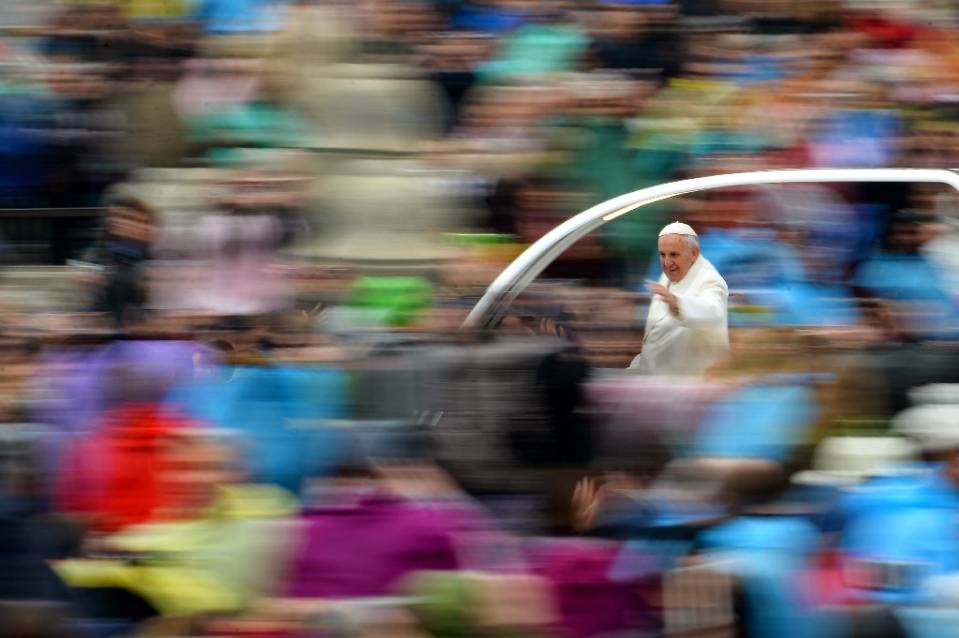
Pope: 'Death penalty represents failure' – no 'humane' way to kill a person

Pope: 'Death penalty represents failure' – no 'humane' way to kill a person
The pope wrote that the principle of legitimate personal defense isn’t adequate justification to execute someone. Photograph: Zuma/Rex

Obama becomes first president to visit US prison (US Justice Systems / Human Rights)

Obama becomes first president to visit US prison   (US Justice Systems / Human Rights)
US President Barack Obama speaks as he tours the El Reno Federal Correctional Institution in El Reno, Oklahoma, July 16, 2015 (AFP Photo/Saul Loeb)

US Death Penalty (Justice Systems / Human Rights)

US Death Penalty (Justice Systems / Human Rights)
Woman who spent 23 years on US death row cleared (Photo: dpa)


.

.
"The Recalibration of Awareness – Apr 20/21, 2012 (Kryon channeled by Lee Carroll) (Subjects: Old Energy, Recalibration Lectures, God / Creator, Religions/Spiritual systems (Catholic Church, Priests/Nun’s, Worship, John Paul Pope, Women in the Church otherwise church will go, Current Pope won’t do it), Middle East, Jews, Governments will change (Internet, Media, Democracies, Dictators, North Korea, Nations voted at once), Integrity (Businesses, Tobacco Companies, Bankers/ Financial Institutes, Pharmaceutical company to collapse), Illuminati (Started in Greece, with Shipping, Financial markets, Stock markets, Pharmaceutical money (fund to build Africa, to develop)), Shift of Human Consciousness, (Old) Souls, Women, Masters to/already come back, Global Unity.... etc.) - (Text version)

… The Shift in Human Nature

You're starting to see integrity change. Awareness recalibrates integrity, and the Human Being who would sit there and take advantage of another Human Being in an old energy would never do it in a new energy. The reason? It will become intuitive, so this is a shift in Human Nature as well, for in the past you have assumed that people take advantage of people first and integrity comes later. That's just ordinary Human nature.

In the past, Human nature expressed within governments worked like this: If you were stronger than the other one, you simply conquered them. If you were strong, it was an invitation to conquer. If you were weak, it was an invitation to be conquered. No one even thought about it. It was the way of things. The bigger you could have your armies, the better they would do when you sent them out to conquer. That's not how you think today. Did you notice?

Any country that thinks this way today will not survive, for humanity has discovered that the world goes far better by putting things together instead of tearing them apart. The new energy puts the weak and strong together in ways that make sense and that have integrity. Take a look at what happened to some of the businesses in this great land (USA). Up to 30 years ago, when you started realizing some of them didn't have integrity, you eliminated them. What happened to the tobacco companies when you realized they were knowingly addicting your children? Today, they still sell their products to less-aware countries, but that will also change.

What did you do a few years ago when you realized that your bankers were actually selling you homes that they knew you couldn't pay for later? They were walking away, smiling greedily, not thinking about the heartbreak that was to follow when a life's dream would be lost. Dear American, you are in a recession. However, this is like when you prune a tree and cut back the branches. When the tree grows back, you've got control and the branches will grow bigger and stronger than they were before, without the greed factor. Then, if you don't like the way it grows back, you'll prune it again! I tell you this because awareness is now in control of big money. It's right before your eyes, what you're doing. But fear often rules. …
Showing posts with label Poverty. Show all posts

Tuesday, April 17, 2018

Street side: Indonesia slum kids eye youth 'World Cup'

Yahoo – AFP, Bagus SARAGIH, April 16, 2018

Nine of the players from Indonesia's street children football team "Garuda Baru"
will head to Moscow to play against teams of disadvantaged children from
two dozen nations (AFP Photo/Elisabetta ZAVOLI)

Jakarta (Indonesia) (AFP) - Somad rarely ventures beyond his impoverished Jakarta neighbourhood, but the 14-year-old is now gearing for a trip to Russia next month as a player in the 2018 Street Child World Cup.

It's the journey of a lifetime for the aspiring striker and eight other Indonesian kids set to compete against teams of other disadvantaged children from two dozen nations.

The event's third edition in Moscow is a long way from Bekasi on the outskirts of Indonesia's teeming capital where Somad's father sorts through foul trash heaps to find and sell usable goods.

Along with his food-seller mother, the teen lives in a 45-metre (485 square foot) makeshift home shared with four other families.

"Not many kids can be as lucky as I am," says Somad, who like many Indonesians goes by one name.

"I want to make my parents and friends proud so we can have better lives and have no need to be scavengers anymore."

Somad lives with his family in a crowded neighborhood of scavenger families in
Bekasi on the outskirts of Indonesia's capital Jakarta (AFP Photo/Elisabetta ZAVOLI)

The slum is mostly populated by trash pickers who live in its hundreds of shacks. A potent smell of garbage is everywhere in the district where stray animals wander along its muddy roads.

More than 200 children are participating in the seven-a-side tournament, which kicks off ahead of this year's Russia-hosted World Cup.

Off the pitch, the kids will take part in art lessons, workshops and there is a conference focused on disadvantaged youth.

"I want to help Indonesia win the competition. But if we do win, I don't want to show off," says striker Bayu, picked for the Indonesian contingent from among more than 90 children.

"I want to share the experience with my friends when I'm back."

In 2014, the boy's team from Tanzania won the tournament while the girl's trophy was claimed by hosts Brazil.

The inaugural 2010 event, started by British charity Street Child United, was played in South Africa.

More than 200 children are participating in the seven-a-side tournament, which
kicks off ahead of this year's Russia-hosted World Cup (AFP Photo/Elisabetta ZAVOLI)

Indonesian team coach Wahyu Kurniawan said children from poor neighbourhoods have a vitality that is key to breaking into professional football.

"Kids from the street are more active and tend to have more power and spirit," he told AFP.

"My job is to convert those qualities into good football skill and sportsmanship on the field."

But the tournament is about more than just sports -- it's to give a voice to marginalised children.

"Achievement in the tournament is not our main priority, it's a bonus," said Jessica Hutting from Kampus Diakoneia Modern (KDM), a children's rights NGO that selected the Indonesian players.

"We use football as a tool to bring street-connected children together in a safe space where their voices can be heard."

Wednesday, October 18, 2017

Despite the clear seas and white sandy beaches of Raja Ampat, Indonesia, the islands' children face the gloomy reality of poor education

Saturday, September 23, 2017

Poverty in paradise: The dark side of Indonesia's new tourism hope

Yahoo – AFP, Kiki Siregar, September 22, 2017

A tableau of white sandy beaches, colourful coral reefs and turquoise water, the
 islands of Raja Ampat are set to be Indonesia's next tourism hotspot -- but locals
fear the government is failing both them and the environment in its development
push (AFP Photo/GOH CHAI HIN)

Raja Ampat (Indonesia) (AFP) - A tableau of white sandy beaches, colourful coral reefs and turquoise water, the islands of Raja Ampat are set to be Indonesia's next tourism hotspot -- but locals fear the government is failing both them and the environment in its development push.

Stretching across 67,000 square kilometres in Indonesia’s far east, the picture-perfect islands might be as close to paradise as visitors can find.

"It’s amazing. We’ve been to millions of islands and I would say it’s the most beautiful one," Canadian Angelika Redweik-Leung said at a lookout above the Pianemo island group.

Raja Ampat -- which means Four Kings -- is made up of 1,500 islands and is home to about 1,400 varieties of fish and 600 species of coral -- making it one of the most biodiverse marine habitats on earth.

Indonesia's government is intent on turning the area into a tourism hotspot, building hotels, restaurants and investing in new harbours.

But on a palm-fringed island about two hours boat ride from Raja Ampat's capital Waisai, villagers still live in simple huts that lack electricity and clean water, while the nearest high school is scores of miles away.

Locals in Indonesia's Raja Ampat told AFP they had seen no improvements to their
 lives despite the dramatic rise in visitors. According to government estimates around 
15,000 tourists now come to the area each year -- up from less than 5,000 in 2010
 (AFP Photo/GOH CHAI HIN)

Locals told AFP they had seen no improvements to their lives despite the dramatic rise in visitors. According to government estimates around 15,000 tourists now come to the area each year -- up from less than 5,000 in 2010.

"They've hurt us indigenous people. They took our land, our water and our forest. We feel betrayed," Paul Mayor, chief of the island's Byak Betew tribe, said of the government's tourism drive.

"That's our land, our ocean, which now is a world-class tourist destination, but we've gained nothing from the influx of tourists," he added.

Mayor also criticised authorities for failing to properly protect the area's unique ecosystem, pointing to a catastrophic cruise ship crash in March, which damaged 13,500 square metres of pristine coral reef.

The 4,200-ton Caledonian Sky ran aground near the island of Kri carrying 102 passengers and 79 crew, but half a year later no one has been held accountable.

Raja Ampat -- which means Four Kings in Indonesian --- is made up of 1,500 islands
 and is home to about 1,400 varieties of fish and 600 species of coral -- making it one
 of the most biodiverse marine habitats on earth (AFP Photo/GOH CHAI HIN)

'We are still poor'

Researchers from the University of Papua, who assessed the impact of the accident, said restoring the damaged reef could cost as much as $16.2 million.

The head of tourism for Raja Ampat, Yusdi Lamatenggo, said the company operating the boat -- Noble Caledonia -- will be summoned to appear in court soon but so far they have not accepted responsibility or paid any damages.

In the meantime, he told AFP, steps were being taken to prevent further accidents by establishing clearly demarcated cruise ship routes and world-class harbours.

But the accident has fuelled feelings of mistrust and exclusion often felt by Papua's indigenous Melanesian population. The resource-rich region was annexed by Jakarta in 1969 and most Papuans feel they have not been given an even share of its natural riches.

The military retains heavy influence in the region and regularly stifles dissent.

After taking office in 2014, president Joko Widodo pledged to speed up development in Papua, but many locals insist they have been forgotten.

"There has been no change," Ariel Fakdawer, head of Saukabu village in Raja Ampat told AFP.

"They've hurt us indigenous people. They took our land, our water and our forest. 
We feel betrayed," Paul Mayor, chief of the island's Byak Betew tribe, said of the
government's tourism drive (AFP Photo/GOH CHAI HIN)

"The yearly Raja Ampat festival, for example, attracts thousands of tourists but we gain nothing from that. We are still poor, but the organizers of such festivals, outsiders, they have made a fortune," he added.

Indigenous groups say they need communication satellites, electricity, better infrastructure, and the right to govern themselves by customary law.

"The government never fulfils our needs because they don't understand what we want," chief Mayor said.

"I believe the government has to approach us by bearing in mind our cultural needs. They have to talk to us indigenous people," he insisted.

But not everyone is against the rush to open up Raja Ampat to the world.

Villager Medzke Karoswaf explained: "This is a modern world. We cannot live isolated like in a cave forever. We have to be open-minded. Like it or not, we don’t live alone in this world."

Wednesday, August 19, 2015

Crashed Indonesian plane found 'destroyed', no survivors

Yahoo – AFP, Levi Cunding, 18 Aug 2015

Indonesian rescuers search through wreckage of the Trigana Air ATR 42-300
 twin-turboprop plane at the crash site in the mountainous area of Oksibil on
August 18, 2015 (AFP Photo/STR)

A plane that crashed in eastern Indonesia was Tuesday found "completely destroyed" with the bodies of all 54 passengers and crew strewn amid the wreckage in a fire-blackened jungle clearing, officials said.

Rescuers finally reached the debris of the Trigana Air plane, which went down Sunday in Papua province during a short flight in bad weather, after abandoning search efforts a day earlier due to mountainous terrain, thick fog and rain.

Indonesian search and rescue personnel
at the command post at Sentani airport in
 Jayapura communicate with the ground
 rescue team at the plane crash site in 
Oksibil on August 18, 2015 (AFP Photo/
Indrayadi Thamrin)
The black box flight data recorders, which could provide clues about the cause of the crash, were retrieved. Money -- some of it burnt -- was also found among the wreckage of the plane, which had been transporting 6.5 billion rupiah ($470,000) in cash.

"The plane has crashed, it is completely destroyed," Bambang Soelistyo, head of the country's search and rescue agency, said of the ATR 42-300 plane after teams reached the site in the morning.

"Everything was in pieces and part of the plane is burnt."

It is just the latest air accident in Indonesia, which has a poor aviation safety record and has suffered major disasters in recent months, including the crash of an AirAsia plane in December with the loss of 162 lives.

Photos of the site showed a fire-blackened clearing in thick jungle strewn with debris. The twin-turboprop plane was carrying 54 people -- 49 passengers and five crew -- and officials said all the bodies had been found.

The team of about 100 rescuers, including soldiers and police, who reached the crash site found some bodies were not intact while others were badly burnt. All those on board were believed to be Indonesians.

Authorities were planning to airlift the bodies from the site by helicopter but efforts were suspended on Tuesday afternoon due to thick fog, Soelistyo told reporters in Jayapura, Papua's capital.

A fresh attempt would be made Wednesday.

'Unpredictable weather'

The money on the plane, which was being carried in four bags by postal officials, was government social assistance funds to be distributed to poor families in the remote community of Oksibil where the plane had been heading.

The wreckage from a Trigana Air ATR 42-300 twin-turboprop scattered among 
trees in the mountainous area of Oksibil district, in Indonesia's Papua province
(AFP Photo/Basarnas)

Soelistyo did not say how much cash had been found, but he told reporters: "I have instructed the team there to secure all the items, including the money, to be handed over to the authorities as evidence."

The plane had set off from Jayapura on what was supposed to be a 45-minute flight to Oksibil.

But it lost contact with air traffic control about 10 minutes before reaching its destination, soon after the crew requested permission to start descending in heavy cloud and rain to land.

Captain Beni Sumaryanto, Trigana Air's service director of operations, said "unpredictable weather and mountainous terrain" had likely caused the accident, adding that the plane was in good condition and the pilot experienced.

View galleryGrieving relatives of passengers on board the ill-fated …
Grieving relatives of passengers on board the ill-fated Trigana Air ATR 42-300 plane wait for inform …
Small aircraft are commonly used for transport in remote and mountainous Papua and bad weather has caused several accidents in recent years.

Last week a Cessna propeller plane crashed in Papua's Yahukimo district, killing one person and seriously injuring the five others on board. Officials suspect that crash was also caused by bad weather.

Indonesian rescuers hold wreckage fragments from the Trigana Air ATR 42-300
 twin-turboprop plane from the crash site in the mountainous area of Oksibil on
August 18, 2015 (AFP Photo/STR)

Trigana Air, a small domestic Indonesian airline, has experienced a string of serious incidents and is banned from flying in European Union airspace.

Last year's AirAsia crash was one of two major air accidents that Indonesia has suffered in the past year alone.

In June an Indonesian military plane crashed into a residential neighbourhood in the city of Medan, exploding in a fireball and killing 142 people.

The aviation sector in Indonesia is expanding fast but airlines are struggling to find enough well-trained personnel to keep up with the rapid growth in the archipelago of more than 17,000 islands.

Wednesday, April 29, 2015

Govt Starts Distribution of Social Benefit Cards

Jakarta Globe, Novy Lumanauw, Apr 28, 2015

President Joko Widodo, center, distributes the Indonesia Health Card (KIS) to
workers at a rubber plantation in North Sumatra. (Antara Foto/Septianda Perdana)

Jakarta. Tens of millions of disadvantaged Indonesians will start receiving the government’s much-touted Indonesia Health Card (KIS) and Indonesia Smart Card (KIP) from this week — months after the flagship social benefit programs were officially unveiled.

The government says the cards will improve Indonesians’ access to education and health services, and it aims to distribute them to more than 100 million people.

A total of 88.2 million people will receive the KIS card, which provides the nation’s poor and near-poor with access to healthcare.

Card holders will be entitled to treatment at public primary care clinics (puskesmas) and treatment in third-class hospitals. Benefits provided under the health card will be managed by the Social Security Agency (BPJS) but funded by insurance premiums of Rp 19,225 ($1.60) per person — paid by the Ministry of Health.

Meanwhile, 20.3 million people will be provided with the KIP card, which entitles students from underprivileged families to 12 years’ free education, as well as education resources and free higher education provided they pass university entrance exams.

Workers at a rubber plantation in North Sumatra were the first to get their hands on the KIS cards on April 18, but the government started national distribution on Tuesday.

Distribution of the cards, a campaign promise of President Joko Widodo, was slated for late 2014, but budget wrangling that was only resolved in January pushed the schedule back.

“We’ll start distributing the cards this week,” Joko said on Tuesday after disbursing 3,289 KIS cards to employees of state-owned shipping and dock company, Dok & Perkapalan Kodja Bahari, in North Jakarta.

The cards are similar to the Jakarta Health Card (KJS) and Jakarta Smart Card (JKP) implemented when Joko was governor of the capital,

Related Article:


Tuesday, April 28, 2015

President Of Indonesia : We Need To Cooperate To Advance The Nation

Jakarta Globe, aacc2015.id, Apr 24, 2015


AACC2015, Bandung – The President of the Republic of Indonesia Joko Widodo invited all representatives of the Asian and African countries to start economic cooperation in order to increase the quality of life of their people.

“The Spirit of Bandung is to advance people’s welfare. Therefore, we must cooperate,” said President Joko Widodo at the height of the commeration of the 60th Anniversary of the Asian African Conference (AAC), in Bandung, on Friday (24/4).

According to the President, the Spirit of Bandung that was agreed by the founders should be a unifier that opens every economic cooperation potential. This should be a good momentum to produce various economic agreements in order to improve people’s welfare.

Still fresh in our memory is the struggle for independence by our predecessors. At that time, all Asian and African countries experienced the impact of colonialism. The Asian African Conference fosters a spirit of togetherness that was initiated by the Spirit of Bandung, to fight colonialism.

Previously, five countries were still dreaming of gaining independence from colonialism, Sri Lanka, Myanmar, Bangladesh, India, and Indonesia. Their dream to gain independence inspired the birth of the Spirit of Bandung, the President added.

Through the AAC Commemoration, Joko Widodo invites all people of the represented countries to inflame the Spirit of Bandung in Asian and African in order to fight for peace, end poverty, and provide better welfare. (Photo: Host, Translator: Mia)


Related Articles:

Bandung Message Signed

"The Timing of the Great Shift" – Mar 21, 2009 (Kryon channelled by Lee Carroll) - (Text version)

“… Here is another one. A change in what Human nature will allow for government. "Careful, Kryon, don't talk about politics. You'll get in trouble." I won't get in trouble. I'm going to tell you to watch for leadership that cares about you. "You mean politics is going to change?" It already has. It's beginning. Watch for it. You're going to see a total phase-out of old energy dictatorships eventually. The potential is that you're going to see that before 2013. They're going to fall over, you know, because the energy of the population will not sustain an old energy leader. Remember where you heard it... in a strange, esoteric meeting with a guy in a chair pretending to channel. [Kryon being factious... Kryon humor] Then when you hear it, you'll know better, won't you? "Maybe there was something really there," you'll say. "Maybe it was real," you'll say. Perhaps you can skip all the drama of the years to come and consider that now? [Kryon humor again]

These leaders are going to fall over. You'll have a slow developing leadership coming to you all over the earth where there is a new energy of caring about the public. "That's just too much to ask for in politics, Kryon." Watch for it. That's just the beginning of this last phase. So many things are coming. The next one is related to this, for a country in survival with sickness cannot sustain a leadership of high consciousness. There is just too much opportunity for power and greed. But when a continent is healed, everything changes. .."

".. Many years ago, the prevailing thought was that nobody should consider China as a viable player on the economic stage. They were backward, filled with a system that would never be westernized, and had no wish to become joined with the rest of the world's economic systems. Look what has happened in only 30 years. Now, look at Africa differently …”


" .... Africa

Let me tell you where else it's happening that you are unaware - that which is the beginning of the unity of the African states. Soon the continent will have what they never had before, and when that continent is healed and there is no AIDS and no major disease, they're going to want what you have. They're going to want houses and schools and an economy that works without corruption. They will be done with small-minded leaders who kill their populations for power in what has been called for generations "The History of Africa." Soon it will be the end of history in Africa, and a new continent will emerge.

Be aware that the strength may not come from the expected areas, for new leadership is brewing. There is so much land there and the population is so ready there, it will be one of the strongest economies on the planet within two generations plus 20 years. And it's going to happen because of a unifying idea put together by a few. These are the potentials of the planet, and the end of history as you know it.

In approximately 70 years, there will be a black man who leads this African continent into affluence and peace. He won't be a president, but rather a planner and a revolutionary economic thinker. He, and a strong woman with him, will implement the plan continent-wide. They will unite. This is the potential and this is the plan. Africa will arise out the ashes of centuries of disease and despair and create a viable economic force with workers who can create good products for the day. You think China is economically strong? China must do what it does, hobbled by the secrecy and bias of the old ways of its own history. As large as it is, it will have to eventually compete with Africa, a land of free thinkers and fast change. China will have a major competitor, one that doesn't have any cultural barriers to the advancement of the free Human spirit.. ...."

Tuesday, April 21, 2015

Dutch agree new tax deal with Malawi, aim to stop tax avoidance

DutchNews.nl, April 20, 2015

Photo: Dutch foreign ministry
The Netherlands is hoping to stop multinationals using agreements with the Dutch tax office to avoid paying tax in developing countries by signing 23 new treaties with African states, the Volkskrant says on Monday.

The treaties will allow African countries to make claims against companies which try to shift profits via the Netherlands for tax purposes or which only have a letterbox company in the country. 

The first treaty was signed with Malawi on Sunday. ‘It is extremely important that the initiative remains with the developing country,’ aid minister Lilianne Ploumen is quoted as saying. 

Malawi tore up a tax treaty with the Netherlands in 2013 because it was being used to avoid taxation, the Volkskrant says. 

Ploumen said the Dutch government does not recognise claims that the Netherlands is a tax haven but said the country was well-placed to take concrete steps in the absence of a global approach.

Related Article:


Monday, April 6, 2015

Pope hails Iran accord, urges end to 'absurd violence' in Easter message

Yahoo – AFP, Jean-Louis De La Vaissiere, 5 April 2015

Pope Francis speaks from the central loggia of St Peters' basilica during the
 "Urbi et Orbi" blessing for Rome and the world following the Easter Mass in the
Vatican on April 5, 2015 (AFP Photo/Filippo Monteforte)

Vatican City (AFP) - Pope Francis appealed Sunday for an end to "absurd violence" in hotspots around the world and said the international community must not stand by in the face of the "immense humanitarian tragedy" in Syria and Iraq.

In his traditional Easter message, the 78-year-old pontiff said he was praying for those killed in armed conflict, including the students massacred by Somali gunmen at a university in Kenya.

Tens of thousands of pilgrims huddled under a sea of umbrellas in a rain-soaked St Peter's Square to hear the pope deliver his "Urbi et Orbi" (To the City and World) blessing, broadcast live to dozens of countries.

Pope Francis greets the crowd from the
 popemobile after the Easter Mass at
 St Peter's square in the Vatican on
April 5, 2015 (AFP Photo/Gabriel Bouys)
In his third Easter message since his election as pope in 2013, the head of the world's 1.2 billion Catholics prayed "for peace, above all, for Syria and Iraq, that the roar of arms may cease".

He called on the international community to "not stand by before the immense humanitarian tragedy unfolding in these countries and the drama of the numerous refugees" created by the two conflicts.

He also prayed for the victims of Thursday's attack in Kenya that left 148 people dead, with survivors sayng the militants spared Muslim students but taunted Christian and Jewish students before killing them.

"I think in particular of the young people who were killed last Thursday at Garissa University College in Kenya," he said.

Earlier Francis greeted pilgrims personally as he rode through the flower-bedecked square aboard his open Popemobile after presiding over Easter mass.

The most important and joyous moment of the Catholic calendar, Easter celebrates the day when Christians believe Jesus rose from the dead.

Pope Francis greets the crowd from 
the popemobile after the Easter Mass 
at the Vatican on April 5, 2015 (AFP
Photo/Filippo Monteforte)
Speaking from the balcony of St Peter's Basilica, Francis also said the framework nuclear accord reached Thursday between Iran and six major world powers inspired hope for "a definitive step toward a more secure and fraternal world".

The Argentine pope pleaded for "absurd bloodshed and all barbarous acts of violence" in Libya to be halted, and voiced his "desire for peace, for the good of the entire people" in war-battered Yemen and Ukraine.

Without referring to a particular hotspot, Francis said: "Those who bear within them God's power, his love and his justice, do not need to employ violence."

Be 'respectful, ready to help'

He prayed for "all who have been kidnapped, and for those forced to abandon their homes and their dear ones" in armed conflict and attacks by extremists in Nigeria and South Sudan as well as parts of Sudan and the Democratic Republic of Congo.

In addition, he urged "peace and freedom for the many men and women subject to old and new forms of enslavement on the part of criminal individuals and groups (and) for the victims of drug dealers... And we ask peace for this world subjected to arms dealers."

Pope Francis greets the crowd from
 the popemobile after the Easter Mass
 at the Vatican on April 5, 2015 (AFP
Photo/Filippo Monteforte)
Francis also sounded his trademark appeal to the rich and powerful to care for the world's poor and downtrodden, saying: "The world proposes that we put ourselves forward at all costs, that we compete."

Instead, Christians should "seek to live in service to one another, not to be arrogant, but rather respectful and ready to help," he said.

Sunday's Easter observances capped a long and demanding Holy Week that left Francis at times appearing tired.

On Friday he presided over the traditional Via Crucis (Way of the Cross) procession at Rome's Colosseum evoking the last hours of Jesus's life.

The day before Francis celebrated two masses -- one for priests, and the other at Rome's Rebibbia prison, where he washed the feet of 10 inmates symbolically evoking Christ's humility -- a theme he took up again on Sunday.

"To enter into the mystery, we need to 'bend down', to abase ourselves," Francis said.

Related Article:


Tuesday, March 24, 2015

Filipina maid captures dreams through photography

Yahoo - AFP, Aaron Tam, March 22, 2015

Filipino photographer Xyza Cruz Bacani poses with her work in Macau on
March 21, 2015 (AFP Photo/Aaron Tam)

Hong Kong (AFP) - From her poverty-stricken roots in a Philippine backwater, via domestic service in Hong Kong to acclaim in New York, Xyza Cruz Bacani's inspirational journey started with a camera bought with borrowed money.

The 28-year-old came to Hong Kong nine years ago to join 300,000 other women working as maids in the city, hoping to earn enough money to help fund her brother's education.

But photography has transformed her life, her images of everything from trips to the supermarket to scenes of abuse at a refuge for domestic workers earning laudatory spreads in international media and at exhibitions.

Bacani was recently named as one of the recipients of a fellowship by the Magnum Foundation, a prestigious scholarship that will allow her to study in New York for six weeks.

Filipino photographer Xyza Cruz Bacani
 poses with her work in Macau on March
21, 2015 (AFP Photo/Aaron Tam)
With that in mind, just a week ago, she quit domestic service to pursue her passion for photography. But when she first came to Hong Kong, survival was her first priority.

"The urge to survive is much bigger than the urge to do art," she told AFP in Macau where her photographs are on show as part of the city's Literary Festival.

A self-professed dreamer, she said she also saw the move to Hong Kong as an opportunity to leave her home village, nine hours' drive from the Philippine capital Manila.

"It was a big contrast when I arrived at the airport, I was very excited because everything is moving fast, and the lights are wonderful, it looks so alive compared to my village," she said.

Her passion for photography really took off four years ago, when her employer -- whom she describes as a "great lady" -- lent her the money to buy her first camera, a Nikon D90.

"When I had (the camera), I shot landscapes to flowers to (portraits of) my mom, and then I did street photography."

From that point on Bacani took photographs at every opportunity she had, whether out buying daily produce for her employer or ranging across Hong Kong on Sundays off work.

At first she only shared her pictures with friends on Facebook -- mostly shot in grainy black and white, capturing street moments in classic reportage style.

A Filipino photographer based in San Francisco saw them on Facebook and was intrigued by their originality and quality. From there she came to the attention of the New York Times Lens blog and then of acclaimed photographer Sebastiao Salgado, who praised her work at an exhibition in Hong Kong late last year.

Reflecting on her journey thus far, she marvels: "Right now it's changed my life 180 degrees, here I am having a show in Macau, going to places."

A voice for the unheard

With increasing concerns over the treatment of domestic helpers in Hong Kong and the region, Bacani is now turning to documentary photography to try to draw attention to abuses.

"That's what I want my photography to do, to be able to help people ... to me photography is a very powerful tool to change someone's perspective towards an issue," she said.

In the summer of 2014, Bacani documented migrant workers who had taken shelter at a refuge after suffering abuse at the hands of their employers, an experience she described as "life-changing".

"I was angry at first, it was a roller-coaster of emotion when I saw this kind of situation.

"I think I was there to be the voice of those domestic workers who remain unheard, whose voices have been muted."

Just last month a judge sentenced a Hong Kong woman to six years in jail for beating and starving her Indonesian maid in a case that made global headlines.

Bacani's own employer could not be more different, she says, offering support and encouragement to pursue her plans of becoming a photographer full-time.

"She said my domestic worker duties... are restricting me from growing up as a person, it's a chain that holds me," Bacani said, after stopping her domestic work last week.

Bacani's story has inspired many other helpers in the city, and she is urging them to pursue their dreams too.

"They keep on telling me... now that they've seen me, I made them realise that it's possible to do the things that you really want to do outside your job.

"I want people to see that your job, your work, it doesn't define who you are," she added.

"The dreams that I had when I was young, I'm having them now."

Monday, January 26, 2015

100 days in power - Has Indonesia's Jokowi shaken things up?

Joko Widodo came to power on pledges of ushering in an era of change and a new leadership style. But while many praise the Indonesian President for economic reforms, analysts say his 'Mr. Clean' image has been dented.

Deutsche Welle, 26 Jan 2015


For many Indonesians, October 20, 2014 seemed like the beginning of a new chapter in the country's recent democratic history. 53-year-old Jakarta Governor Joko Widodo, popularly known as Jokowi, was sworn in as president of the world's fourth most populous country, after narrowly defeating ex-general Prabowo Subianto in a hotly contested election in July.

The move symbolized not only the culmination of the remarkable career of a man who started off as a furniture seller on the island of Java and quickly rose through the ranks of government. It also indicated a generational change as Jokowi became the first president without links to the government of former dictator Suharto, who was overthrown in 1998 after more than three decades in power.

High hopes

Expectations were high when Jokowi came to power. His reputation for being corruption-free, direct and down-to-earth as governor of Jakarta had appealed to many voters, some of whom even compared the 53-year-old to US President Barack Obama who spent part of his childhood in the Southeast Asian nation.

Many say Jokowi's cabinet makeup
 reflects the strong influence exerted
by Megawati Sukarnoputri
Three months into his presidency, the Indonesian leader has been facing a host of major challenges inherited from previous governments, ranging from fighting the country's endemic corruption and rising inequality, to revitalizing the sluggish economy and improving the infrastructure.

In addition, Jokowi has had to deal with a hostile parliament, given that most of its members are aligned with losing candidate Prabowo.

Given the difficult task ahead and Jokowi's lack of experience in regional and international affairs, many had warned against expecting sensational developments in the first 100 days of his term. But has Jokowi laid the groundwork for a successful presidency? The results are mixed.

Jokowi's team

An early test for the new leader came with the formation of his cabinet. While Jokowi's outsider credentials made him appealing to the electorate during the campaign, they also meant that he lacked the political and patronage networks that other national politicians in Indonesia enjoy.

So he appointed a total of 18 technocrats and newcomers to lead several ministries to implement some of the country's much-needed reforms - a move welcomed both at home and abroad.

However, the other posts of his 34-strong cabinet went to members of his ruling coalition, a move criticized by many as reflecting the strong influence of his party's chairwoman and former president Megawati Sukarnoputri.

"The political mandate from the PDI-P and its party coalition for his presidency created an apparent headache for Jokowi when selecting his ministers. The new Cabinet is obviously not all the president's men," Wahyudi Kumorotomo, professor of Public Administration at Indonesia's Gadjah Mada University wrote on the academic site "The Conversation."

Even more controversial has been his choice for national police chief, Budi Gunawan, suspected by the Corruption Eradication Commission (KPK) of receiving bribes - an appointment that has cast doubts on Jokowi's campaign promise to deliver clean governance.

The issue of corruption has been plaguing the country for years now, with Indonesia ranking 107th out of 174 nations in Transparency International's 2014 Corruption Perception Index. The president has therefore been under mounting pressure to replace his pick, but has so far refused.

But more than just graft, analysts argue the issue also reflects Jokowi's struggle with consolidating power. Budi is seen as close to Megawati and many in the country consider his nomination a political maneuver aimed at further appeasing the PDI-P.
Yohanes Sulaiman, political analyst and lecturer at the Indonesian Defense University, argues that by nominating Budi as police chief, the president has squandered a lot of the goodwill from people: "Many saw this as proof of Jokowi deferring too much to Megawati at the expense of his principles," he said.

Reducing fuel subsidies

As for the economy, one of the president's top priorities, Jokowi has shown decisiveness in taking on the task of reducing government fuel subsidies, which for years had been a major drain on government fiscal resources, earning him international praise.

Takehiko Nakao, President of the Asian Development Bank, said: "With the extra budget funds resulting from fuel subsidy cuts, the government can now allocate more resources for infrastructure, which are needed to revive and diversify sources of economic growth." In fact, many multinational companies were encouraged by Jokowi's "clean image" and announced plans to expand operations in Indonesia.

Jokowi earned international praise by acting decisively on
curbing fuel subsidies

"The move to cut fuel subsidies is encouraging since it suggests that Jokowi is serious about economic reform in Indonesia, and is even prepared to take steps that may prove unpopular in the short run," Gareth Leather, Asia Economist at Capital Economics told DW.

But while the cuts were welcomed by economists, they also partly dented his popularity as the price of petrol and diesel across the archipelago went up by more than 30 percent in mid-November.

The impact, however, was partly cushioned by the recent fall in global oil prices.

Helping the poorest

The president has also made good on his campaign promise to help the nation's poorest by diverting some of the extra funds to areas such as health and education. Just days after his inauguration, the government launched the Indonesia Smart Card and Indonesia Heath Card, guaranteeing free medical treatment for the poor as well free schooling.

Analyst Sulaiman argues this gesture towards the country's low and middle-classes certainly offset the impact of the fuel price hike. "Jokowi's biggest political capital comes from the impression among many that he genuinely cares about people and that he is one of them, which to some degree may come from his humble background," Sulaiman said.

And it seems that Jokowi has kept this personal connection with the people as seen in his reaction to the loss of AirAsia Flight QZ8501 where he met with the victims' families and organized a swift response.

Dealing with the opposition

A somewhat unexpected positive aspect of Jokowi's first three months in office has been the apparent improvement of relations with the opposition, which initially seemed bent on making his life very difficult in parliament.

"There have been internal squabbles within Golkar, one of the biggest parties within the opposition, which have led them to tone down the rhetoric," said Sulaiman.

Jokowi's relations with the opposition in
Parliament have apparently improved.
But how long will this last?
If Golkar as an organization were to switch sides, or if a large enough number of individual lawmakers was to defect to Jokowi, he could gain the legislative majority he now lacks.

On top of that, in an apparent concession to the president, the opposition-dominated parliament recently approved direct elections for governors and mayors, overturning controversial legislation passed in September under Jokowi's predecessor Susilo Bambang Yudhoyono, which had led to protests and criticism amongst many Indonesians.

'No clemency for drug traffickers'

Despite the signs of progress in parliament, one of Jokowi's latest decisions has led many outside the country to slam his stance on human rights and tarnish his image. Indonesia brushed aside last-minute appeals by foreign leaders and, on January 18, executed a total of six people convicted of drug trafficking, including five foreigners from Vietnam, Malawi, Nigeria, Brazil and the Netherlands.

President Jokowi not only rejected clemency requests, but also refused a last-minute appeal by Brasilia and Den Haag to spare their countrymen. Instead, he defended the executions, saying those convicted of drug trafficking would not receive a presidential pardon since Indonesia is facing an "emergency" over drug use.

The incident didn't only heighten diplomatic tensions, but also triggered international criticism from human rights groups. Amnesty International said the first executions under Indonesia's new president were "a retrograde step" for human rights. Jakarta had an unofficial four-year moratorium on executions until 2013, when five people were put before the firing squad. There were no executions last year.

Jokowi rejected clemency for
drug trafficking convicts
Another controversial issue, especially among Indonesia's neighbors, has been Jakarta's decision to sink foreign boats caught illegally fishing in Indonesian waters. While the new administration has defended the policy as a "necessary deterrent," others argue the issue is not one of legality but propriety.

"If any Malaysian fishermen accidentally enter into Indonesian waters, there is no need to sink their boats. Just escort them back to the Malaysian waters," Malaysian Home Minister Ahmad Zahid Hamidi Ad was quoted as saying by the "The Rakyat Post."

The road ahead

It's been 100 days since Jokowi assumed office, and the so-called "Jokowi-effect" seems to have been replaced by realism. The new leader has offered Indonesia the prospect of a fresh start, but he also has his work cut out for him. Analyst Gregory Poling, Indonesia expert with the Washington-based Center for Strategic and International Studies says Jokowi has passed through the period of post-election euphoria and into the gritty realm of day-to-day governing.

"For every step taken toward necessary reforms, his administration seems to take another backward," Poling underlines. Moving forward, he argues, the electorate will be looking to see whether his pledges of good governance will outweigh patronage politics within his coalition, and especially whether he can step out of Megawati's shadow.

Related Article: